A machine that reaps, threshes, and cleans grain in one pass.
🚜
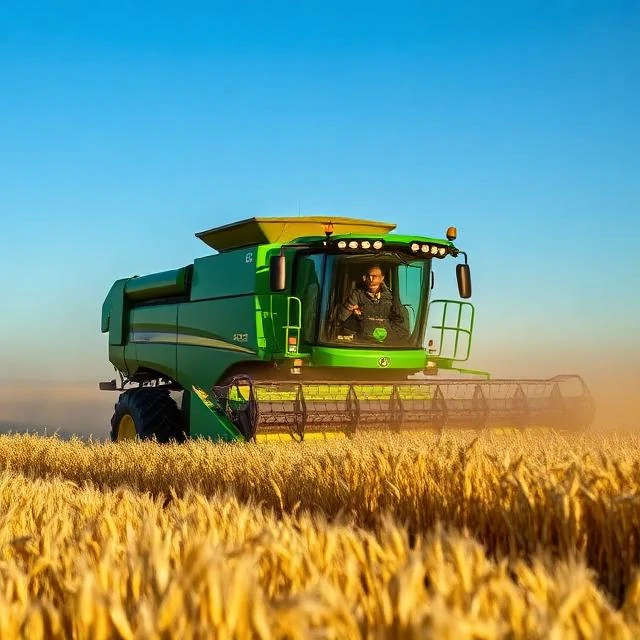
A combine harvester is a large agricultural machine that reaps, threshes, and cleans grain crops in a single pass, replacing the separate operations of cutting, binding, threshing, and winnowing. The modern combine developed in the 19th century from early reaping machines; the first commercially successful combine was built by Hiram Moore in the United States in 1835, and pull-type combines were common by the late 1800s. Self-propelled combines appeared in the 1920s and became dominant after World War II, with major manufacturers including John Deere, Claas, Case IH, and New Holland. A combine consists of a header, reel, cutter bar, feeder house, threshing cylinder or rotor, sieves, grain tank, and unloading auger. Modern machines use GPS guidance, yield monitors, and moisture sensors to optimise harvesting and map field variability. Combines are used for wheat, barley, oats, maize, soybeans, rice, and other cereals and oilseeds. Their capacity has grown from a few tonnes per hour to over 100 in the largest models.
Comments
No comments yet. Be the first to share a thought.
Leave a comment