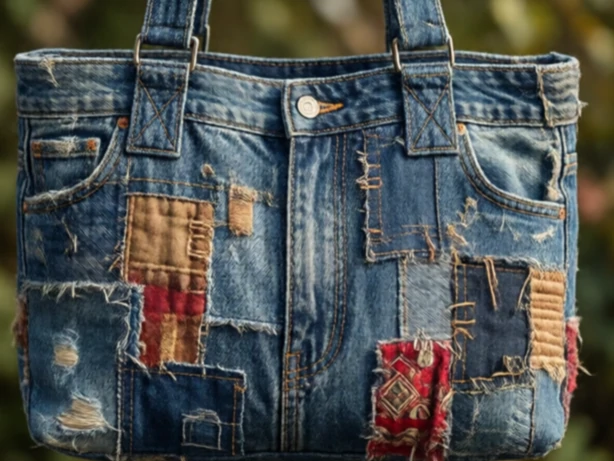
Upcycling creates new garments from existing materials. It takes something discarded or unwanted and transforms it into something of higher value. A worn denim jacket becomes a patchwork bag. Old bedsheets become a dress. Vintage scarves become a blouse. Upcycling differs from recycling, which breaks materials down and reforms them. Upcycling preserves the original material and uses it directly.
The practice has roots in necessity. Families have always mended and remade clothing. In the 20th century, wartime rationing made upcycling common. Today, it has become a response to fashion waste. Designers like Marine Serre and Bethany Williams build collections around repurposed materials. Small brands and individual makers upcycle on a craft scale. Some use deadstock fabric, unsold garments, and vintage pieces as raw material.
Upcycling has limits. It is labor-intensive and hard to scale. Each piece is unique, which makes production and pricing difficult. Sourcing consistent materials is a challenge. Quality depends on the condition of the original garment. Upcycled clothing often costs more than mass-produced equivalents because of the time involved. Still, it offers a path to reduce waste and create distinctive pieces. For designers and consumers concerned about sustainability, upcycling turns a problem into a resource.
Common approaches
- Repurposing vintage garments
- Patchwork and piecing
- Deadstock fabric use
- Embroidery and appliqué over flaws
- Reconstruction and resizing
Comments (2)
Leave a comment