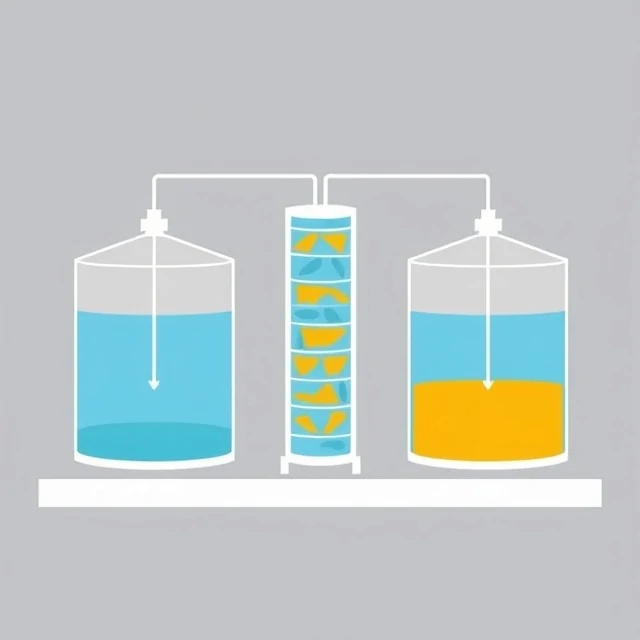
A flow battery stores energy in liquid electrolytes held in external tanks. Pumps circulate the liquids through a stack of cells where the chemical reaction occurs. Because the energy is stored in the tanks, not the stack, the amount of energy can be scaled simply by using bigger tanks. The power output depends on the size of the stack.
This decoupling of power and energy is the key advantage. A flow battery can store many hours of electricity at relatively low cost. Vanadium is a common electrolyte, though it is expensive. Zinc-bromine and iron-based chemistries are cheaper alternatives. Cycle life is long, often over 10,000 cycles, with little degradation.
Flow batteries suit grid storage. They handle daily charge and discharge cycles well. They are safe, since the electrolytes are not flammable. Their drawbacks are lower energy density, higher upfront cost, and complexity. They will not fit in a phone. But for a substation or wind farm, they are a strong option.
Common chemistries
- Vanadium redox
- Zinc-bromine
- Iron-chromium
- Iron flow
- Organic flow batteries
Comments
No comments yet. Be the first to share a thought.
Leave a comment