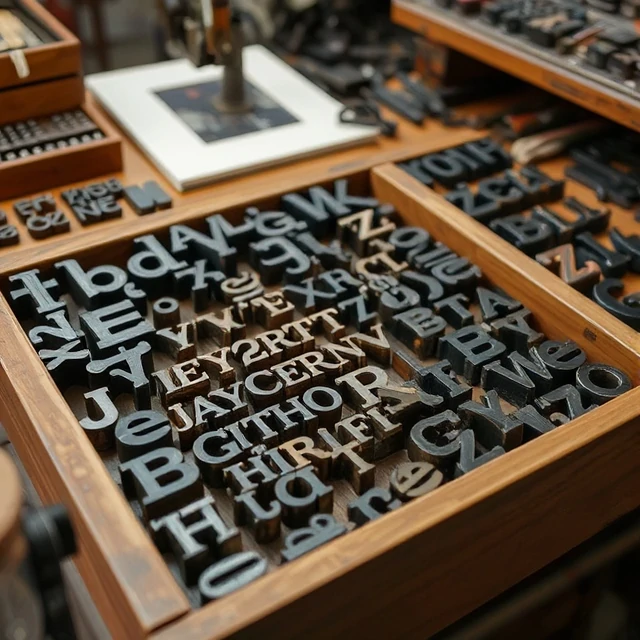
A typeface is a set of characters sharing a common design style. Helvetica is a typeface. Times New Roman is a typeface. The term is often confused with font, though the two are not identical. A typeface is the design. A font is the specific delivery mechanism, the file or metal sort that contains the characters. In everyday use, the distinction has blurred, and many people use the words interchangeably.
Typefaces come in families. A family includes multiple weights and styles: light, regular, bold, italic, condensed. Helvetica Neue, for example, has dozens of variations. Designers choose typefaces based on tone, legibility, and context. A geometric sans-serif like Futura feels modern and clean. A humanist serif like Garamond feels classical and warm. A slab serif like Rockwell feels sturdy and industrial.
What defines a typeface
- Consistent stroke weight and proportion.
- A complete set of upper and lowercase letters, numerals, and punctuation.
- Multiple weights and styles in a family.
- A distinct personality or voice.
Choosing a typeface is not just about looks. It affects how quickly people read, how they feel about the message, and whether they trust the source.
Comments
No comments yet. Be the first to share a thought.
Leave a comment