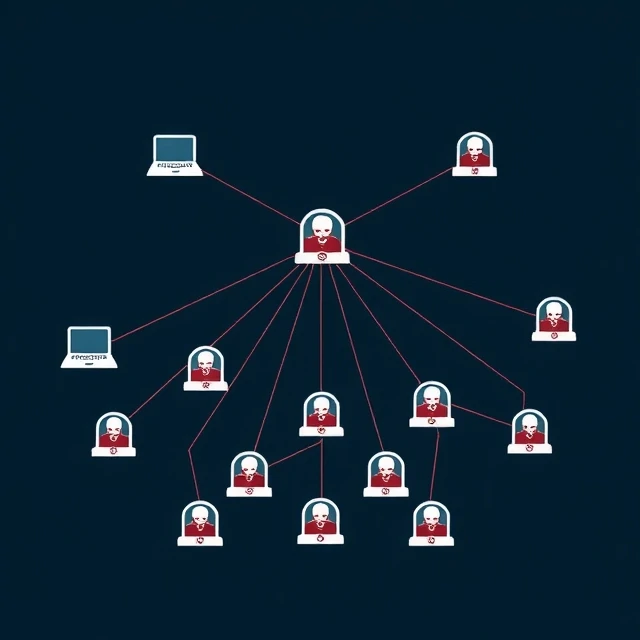
A worm spreads on its own. It does not need a host file or a user to click anything. It finds vulnerable systems, exploits them, and copies itself. Then it repeats. Worms can spread across the internet in minutes. The Morris worm in 1988 infected thousands of machines and brought down a significant portion of the early internet. It was an accident, but the damage was real. Code Red in 2001 defaced websites and launched denial-of-service attacks. Conficker in 2008 infected millions of Windows machines and built a massive botnet.
Worms exploit network services, weak passwords, and unpatched vulnerabilities. They scan for targets, often at random, and move quickly. Some carry payloads. Others just spread. The distinction is less important than the speed. A worm can compromise an entire network before administrators know it exists. Defense requires patching, segmentation, and network monitoring. A worm that cannot reach a vulnerable service cannot spread. A network segment that blocks unnecessary traffic slows it down. Detection focuses on anomalous scanning and rapid connection attempts. By the time alerts fire, the worm may have already spread. Prevention is the only reliable strategy. Once a fast-spreading worm is loose, containment is a race against time.
Worm characteristics
- Self-replicating — no host or user needed
- Network-based — spreads through vulnerabilities and open services
- Fast — can infect thousands of systems in minutes
- Payload optional — some spread only, others deliver malware
A worm is a virus without the leash. It goes where it wants and does not need help.
Comments
No comments yet. Be the first to share a thought.
Leave a comment