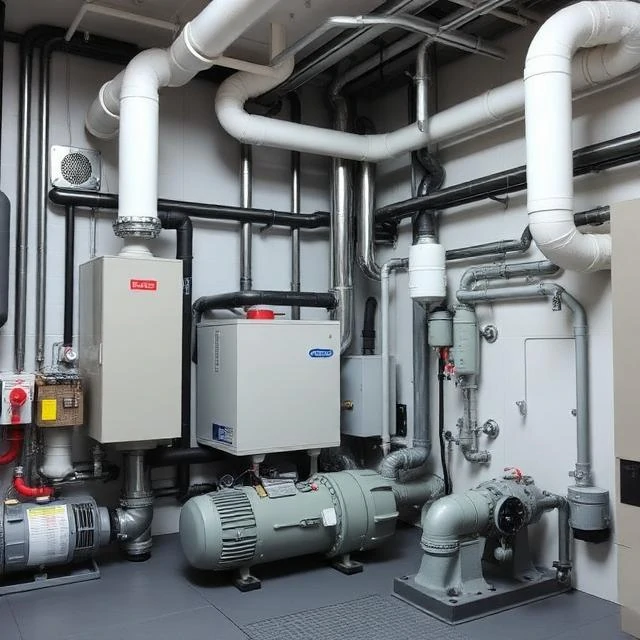
HVAC stands for heating, ventilation, and air conditioning. It is the system that keeps indoor spaces comfortable and healthy. HVAC includes furnaces, boilers, heat pumps, air conditioners, fans, ducts, and controls. It is usually the largest energy consumer in a commercial building.
Heating and cooling are the most visible functions, but ventilation is just as important. Fresh air dilutes pollutants, controls humidity, and removes odors. In dense occupancies, ventilation rates are set by code. During the COVID-19 pandemic, ventilation became a public health issue, and many buildings upgraded their systems.
HVAC systems come in many types. A split system has an outdoor unit and an indoor unit. A central system uses ducts to distribute conditioned air. A radiant system heats or cools surfaces rather than air. Each has advantages depending on climate, building type, and budget.
Designing HVAC requires coordination. Ducts need space. Equipment needs access for maintenance. Controls need to be programmed. When HVAC is an afterthought, the result is noisy, uncomfortable, and inefficient.
Comments
No comments yet. Be the first to share a thought.
Leave a comment