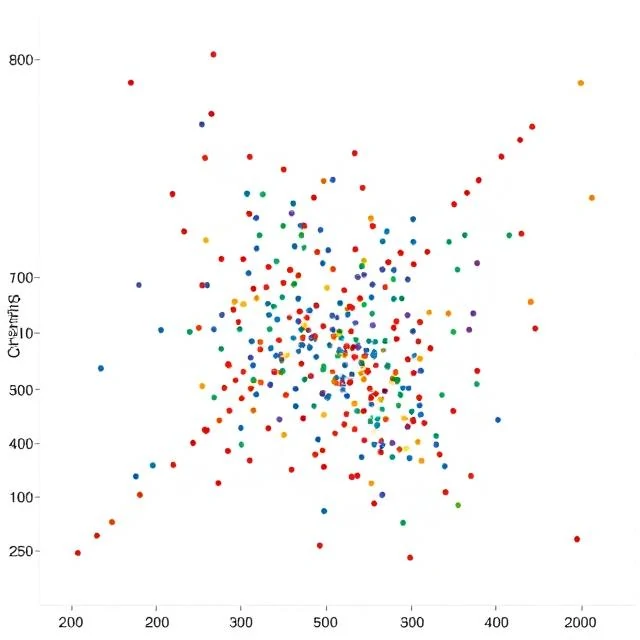
Nobody labels the data. Clustering looks for natural groupings within a dataset, putting similar points together and separating dissimilar ones. It is unsupervised learning in its purest form, and it shows up in customer segmentation, image compression, and anomaly detection.
Algorithms differ in how they define similarity and shape. K-means partitions points into a fixed number of spherical clusters. Hierarchical clustering builds a tree of nested groups. DBSCAN finds dense regions and labels sparse points as noise.
Common clustering methods
- K-means and k-medoids
- Hierarchical agglomerative clustering
- DBSCAN and density-based methods
- Gaussian mixture models
- Spectral clustering
Evaluating clusters is tricky because there is no ground truth. Silhouette scores and elbow plots offer guidance, but domain knowledge usually decides whether a grouping is meaningful.
Comments
No comments yet. Be the first to share a thought.
Leave a comment