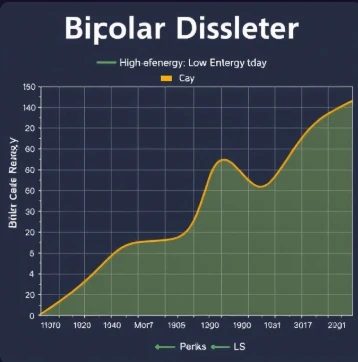
Periods of elevated energy, reduced need for sleep, and racing ideas alternate with stretches of deep depression. That cyclical pattern defines bipolar disorder. Manic or hypomanic episodes can feel exhilarating at first yet often lead to reckless decisions, strained relationships, and exhaustion.
Bipolar I includes full manic episodes; bipolar II features hypomania and major depression. Genetics play a substantial role, and stress or sleep disruption can trigger mood shifts. Diagnosis requires careful history because the condition is frequently mistaken for unipolar depression, especially when mania is mild or remembered fondly.
Mood stabilizers, antipsychotics, and structured psychotherapy form the main treatment. Regular sleep, routine, and early warning systems help limit the amplitude of swings. Many people with bipolar disorder lead productive lives once the illness is recognized and managed. The goal is not to flatten all emotion but to keep mood within a range that supports rather than derails daily functioning.
- Alternating manic/hypomanic and depressive episodes
- Strong genetic component
- Requires accurate diagnosis to avoid mistreatment
- Managed with medication and lifestyle structure
Comments
No comments yet. Be the first to share a thought.
Leave a comment