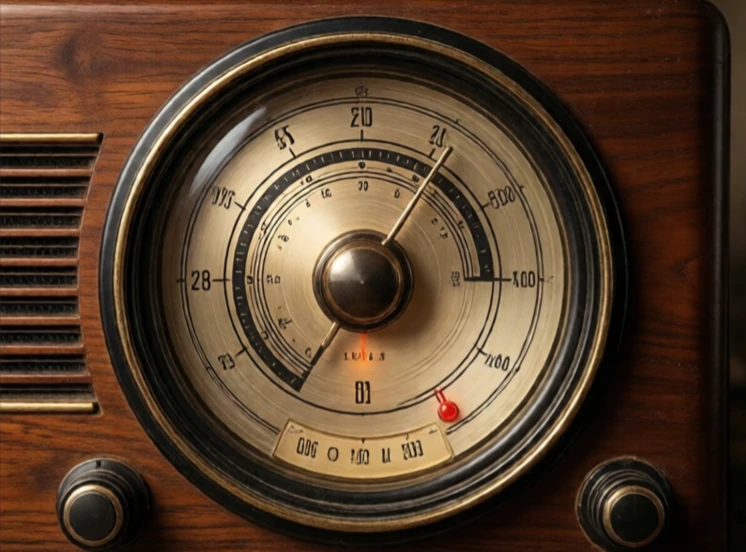
Frequency modulation varies the frequency of a carrier wave to carry information. The amplitude stays constant. The frequency shifts up and down. The receiver detects those shifts and recovers the original signal. FM radio is the classic example. It sounds clearer than AM because noise mostly affects amplitude, not frequency.
FM was invented by Edwin Armstrong in 1933. It was superior to AM but took years to adopt. FM radio uses the 88 to 108 MHz band. It offers better sound quality and resistance to interference. Stereo FM and FM subcarriers carry additional data, like artist information.
FM characteristics
- Constant amplitude
- Frequency varies with the signal
- Resistant to amplitude noise
- Requires more bandwidth than AM
- Used in radio, television audio, and two-way radio
FM is not just for radio. It is used in analog television audio, cordless phones, and walkie-talkies. Digital modulation schemes like FSK are based on frequency shifts. GFSK is used in Bluetooth. The principle of frequency modulation remains essential in modern communication.
Comments
No comments yet. Be the first to share a thought.
Leave a comment