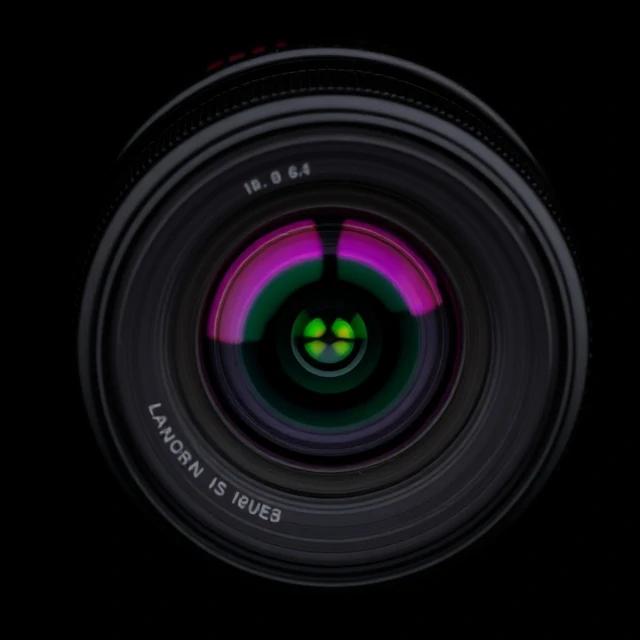
Aperture is the opening in a lens that controls how much light passes through to the sensor. It works like the pupil of an eye. A wide aperture lets in more light and narrows the depth of field, blurring the background. A small aperture lets in less light and extends sharpness from foreground to background. The size is measured in f-stops, written as f/2.8, f/8, f/16. Smaller numbers mean bigger openings.
The sequence of f-stops is standardized: f/1.4, f/2, f/2.8, f/4, f/5.6, f/8, f/11, f/16, f/22. Each step halves or doubles the light reaching the sensor. A lens set to f/2.8 lets in twice as much light as f/4. That relationship matters when you are balancing exposure. Open the aperture one stop and you can halve the shutter speed or lower the ISO. Photographers choose aperture for creative reasons as much as exposure. A portrait at f/1.8 isolates the face. A landscape at f/11 keeps everything sharp.
What aperture affects
- Light. Wider apertures gather more light.
- Depth of field. Wider apertures produce shallower focus.
- Sharpness. Most lenses are sharpest two or three stops from wide open.
- Bokeh. The shape and quality of out-of-focus highlights.
The aperture blades inside the lens form a polygon. More blades make rounder bokeh. That is why a nine-blade lens often costs more than a seven-blade one.
Comments
No comments yet. Be the first to share a thought.
Leave a comment