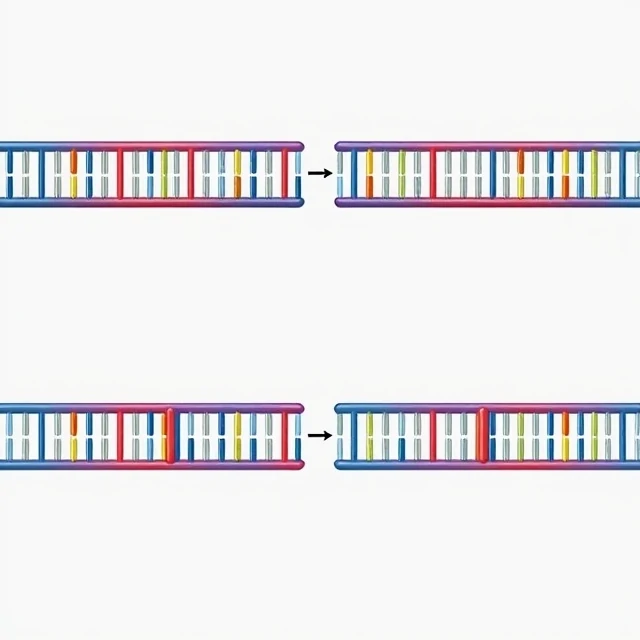
Homologous chromosomes do not stay intact during meiosis. Crossing over is the reciprocal exchange of genetic material between non-sister chromatids of homologous chromosomes. The process occurs during prophase I and produces new combinations of alleles.
Physical points of exchange are called chiasmata. Crossing over increases genetic diversity among gametes and therefore among offspring. It also helps hold homologous chromosomes together until they segregate properly. The frequency of crossing over between two loci is used to construct genetic maps.
Errors in the process can lead to deletions, duplications, or other rearrangements. Cytologists observe chiasmata under the microscope; molecular methods detect recombinant DNA molecules. Without crossing over, linkage would be absolute and genetic variation would be far more limited.
- Exchange of DNA between homologous chromosomes
- Occurs during prophase I of meiosis
- Generates genetic recombination
- Visible as chiasmata under the microscope
Comments
No comments yet. Be the first to share a thought.
Leave a comment