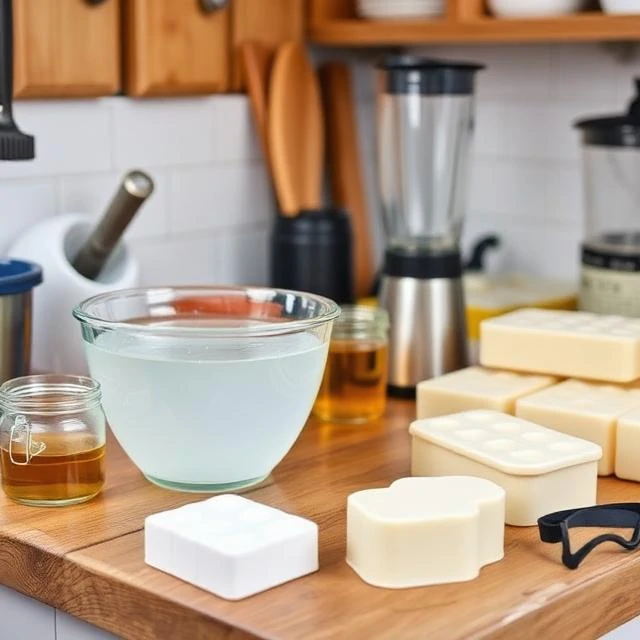
Soap making combines fats or oils with lye, which is sodium hydroxide dissolved in water. The mixture undergoes saponification, a chemical reaction that turns oil and lye into soap and glycerin. There is no lye left in the finished bar after the reaction completes, as long as the recipe is balanced. Too much lye makes a harsh, caustic bar. Too much oil leaves a soft, greasy bar. A lye calculator handles the math.
Cold process soap making mixes oils and lye at specific temperatures, pours the batter into a mold, insulates it, and lets it saponify over 24 to 48 hours. Hot process cooks the soap to finish saponification faster. Melt and pour uses a pre-made soap base that you melt, color, and scent. Melt and pour is safer for beginners because it avoids handling lye. Cold process gives more control over the final recipe.
Safety essentials
- Goggles and gloves when handling lye
- Ventilation, because lye fumes irritate lungs
- Stainless steel or heat-safe plastic bowls, never aluminum
- White vinegar on hand to neutralize spills
Always add lye to water, never water to lye. The mixture heats fast and can splash. Stir slowly and keep your face back.
Comments
No comments yet. Be the first to share a thought.
Leave a comment