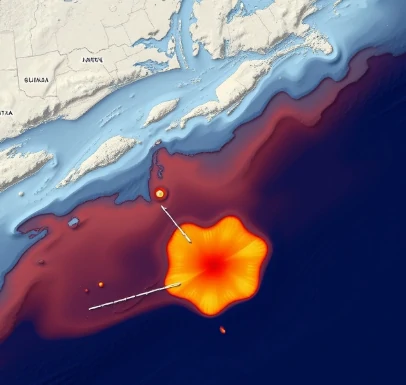
In some coastal waters, oxygen levels fall so low that most animals cannot survive. These regions are called dead zones. They form when excess nutrients, usually nitrogen and phosphorus from agriculture and sewage, fuel dense algal blooms. When the algae die and sink, bacterial decomposition consumes the dissolved oxygen faster than it can be replenished.
Stratification of the water column prevents mixing of oxygen-rich surface water into the depths, intensifying the problem. The Gulf of Mexico dead zone, fed by the Mississippi River, is one of the largest and most studied. Similar features appear in the Baltic Sea, the Chesapeake Bay, and many other nutrient-enriched systems worldwide.
Mobile animals flee; sessile organisms die. Fisheries and ecosystem services suffer. Reducing nutrient loads through improved fertilizer management, wastewater treatment, and restoration of wetlands that intercept nutrients is the primary long-term solution. Seasonal monitoring tracks the size and intensity of dead zones each year.
A dead zone can expand across thousands of square kilometers during summer and shrink again with autumn storms.
Comments
No comments yet. Be the first to share a thought.
Leave a comment