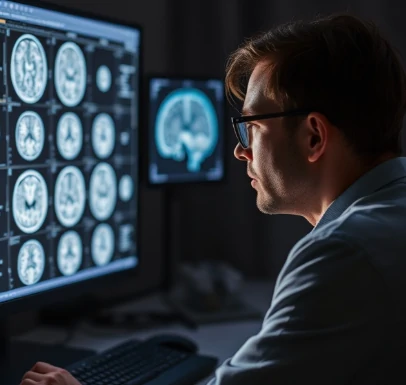
How does a pattern of neural firing become a remembered face or a spoken sentence? Cognitive neuroscience tackles questions of that kind by linking mental operations to their biological implementation in the brain.
The field draws on experimental psychology for precise behavioral paradigms and on neuroscience for tools that measure or manipulate brain activity—functional MRI, EEG, MEG, TMS, and increasingly invasive recordings in surgical patients. Computational models help bridge the gap between neural data and cognitive theory.
Major topics include attention, memory systems, language, decision-making, and consciousness. Findings have refined classical psychological concepts and generated new ones grounded in neural mechanisms. Clinical applications range from better understanding of developmental disorders to the design of rehabilitation strategies after brain injury.
- Links cognitive processes to brain mechanisms
- Uses imaging, recording, and stimulation methods
- Integrates psychology and neuroscience
- Informs both theory and clinical practice
Comments
No comments yet. Be the first to share a thought.
Leave a comment