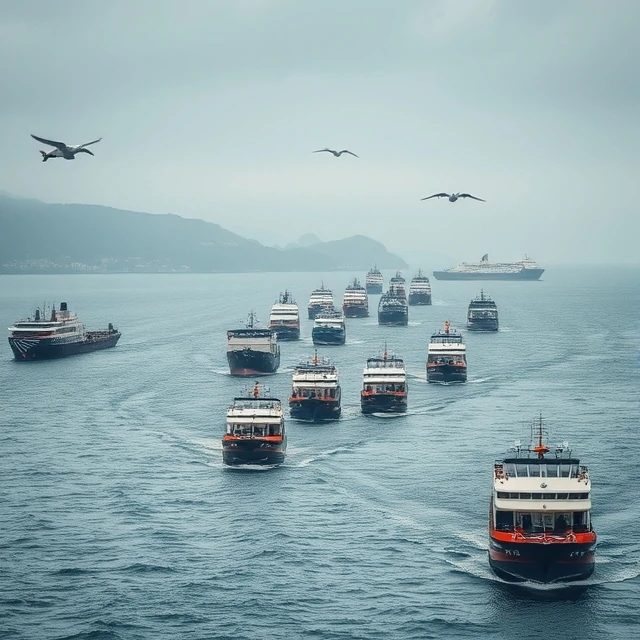
Some waterways leave no alternative route. A chokepoint is a narrow passage—such as a strait, canal, or channel—through which a large volume of shipping must pass, making it strategically and commercially critical.
Examples include the Strait of Hormuz, the Malacca Strait, the Suez Canal, and the Panama Canal. Closure or congestion at a chokepoint immediately affects freight rates, schedules, and energy supplies. Naval presence and political stability around chokepoints are closely watched.
Ship operators plan fuel, timing, and routing with chokepoint risk in mind. Alternative routes usually exist but cost extra time and money. Understanding chokepoints is basic to both commercial shipping strategy and maritime security analysis.
- Narrow, high-traffic maritime passage
- Critical to global trade flows
- Vulnerable to congestion, closure, or conflict
- Shapes routing and risk planning
Comments
No comments yet. Be the first to share a thought.
Leave a comment