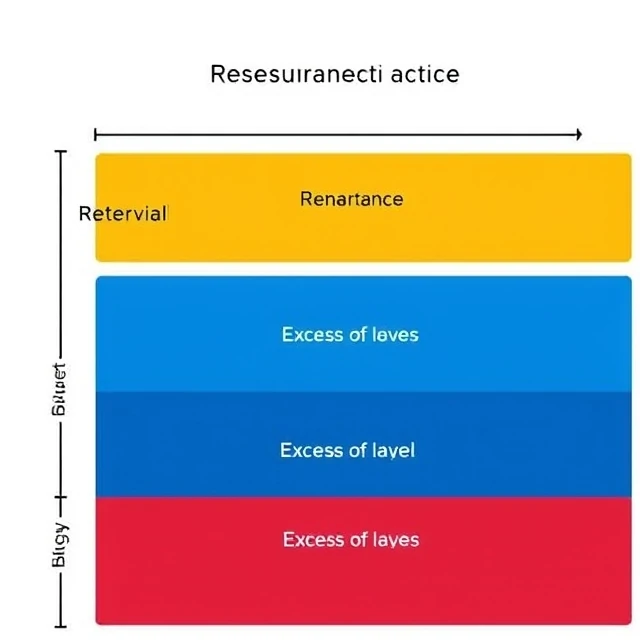
Primary insurers often want protection only against the large losses. Excess of loss reinsurance is a non-proportional arrangement in which the reinsurer pays when a loss, or a collection of losses from one event, exceeds a predetermined retention retained by the cedent.
Coverage may be per risk, protecting individual large policies, or per occurrence, protecting against accumulations from a single event such as a storm. The reinsurer’s limit sits above the retention and may be subject to an annual aggregate. Premium is usually a fixed amount or a rate on the cedent’s subject premium.
Because the reinsurer does not share every small loss, excess of loss is an efficient way to buy catastrophe or high-limit protection. Wording of the retention, the loss-occurrence definition, and any ultimate-net-loss provisions determines how recoveries are calculated after a complex event.
- Reinsurance that pays above a retention
- Non-proportional sharing of risk
- May be per risk or per occurrence
- Efficient for catastrophe and large-line protection
Comments
No comments yet. Be the first to share a thought.
Leave a comment