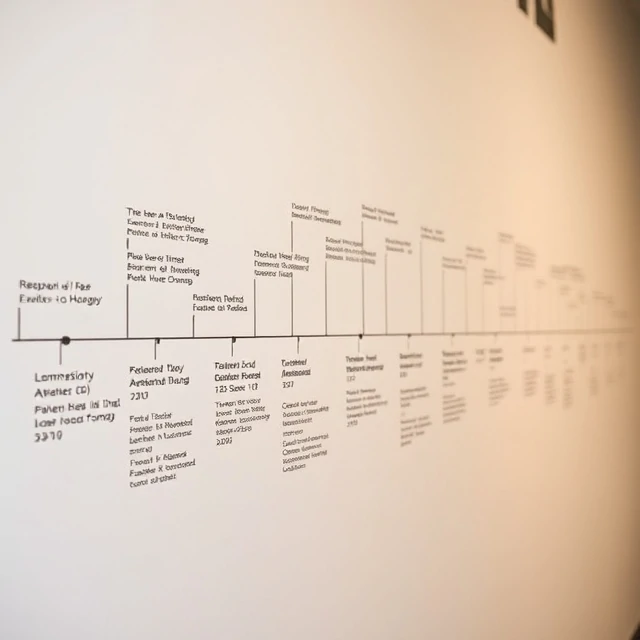
Without sequence, events lose meaning. Chronology is the arrangement of occurrences in the order of their happening. It supplies the backbone for historical narrative and allows comparison across regions and cultures.
Absolute chronology assigns dates in a common era; relative chronology establishes order without precise years. Tools include king lists, astronomical references, stratified archaeological deposits, and scientific dating methods. Synchronisms—records that link events in different places—help stitch regional timelines into wider frameworks.
Disputes over chronology have reshaped entire fields, from the dating of early Mediterranean civilizations to the calibration of radiocarbon results. A reliable chronology lets historians ask questions about causation, duration, and coincidence. It is the quiet infrastructure on which most historical argument rests.
- Ordering of events in time
- Absolute or relative
- Built from texts, archaeology, and science
- Essential for causal historical analysis
Comments
No comments yet. Be the first to share a thought.
Leave a comment