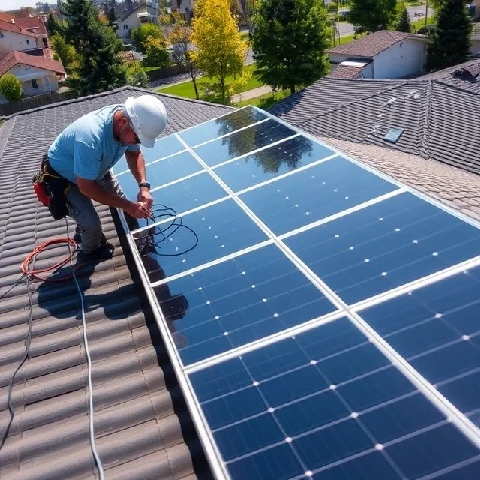
A photovoltaic cell turns light directly into electricity. It uses semiconductor materials, usually silicon, that release electrons when struck by photons. The electrons flow through an external circuit, producing current. No moving parts, no fuel, no emissions at the point of use.
The cell has two layers. One is treated to have extra electrons, the other to have missing electrons, or holes. Where the layers meet, an electric field forms. Photons knock electrons loose, and the field pushes them in one direction. Metal contacts collect the current.
Efficiency varies by material. Standard silicon cells convert 15 to 22 percent of sunlight into electricity. Perovskite and tandem cells push higher in the lab. Costs have fallen more than 90 percent since 2010. Solar is now the cheapest source of new electricity in many markets. Manufacturing is dominated by China, which produces most of the world's panels.
Key types
- Monocrystalline silicon
- Polycrystalline silicon
- Thin-film cadmium telluride
- Perovskite
- Tandem cells
Comments
No comments yet. Be the first to share a thought.
Leave a comment