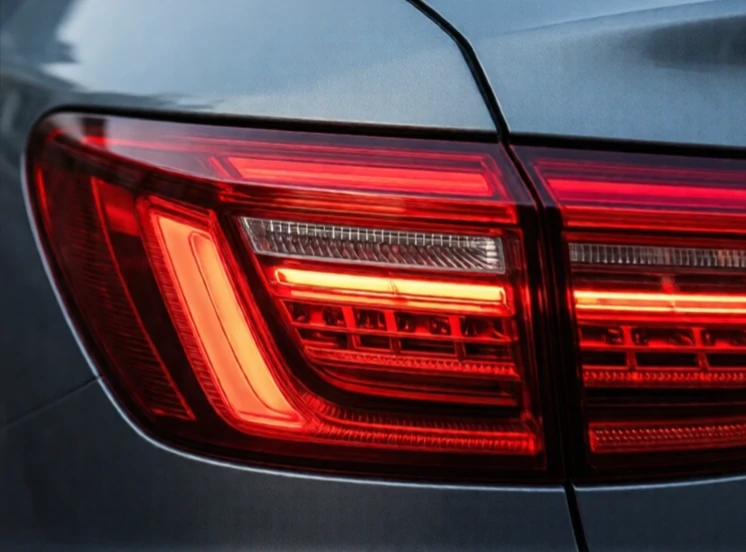
Taillights mark the rear of a vehicle. They glow red when the headlights are on and brighten when the brakes are applied. That brightness difference is critical. A dim taillight says "here I am." A bright brake light says "I am stopping."
Early cars used oil lamps or simple bulbs. Modern taillights use LEDs, which light faster and last longer. The faster illumination matters. At highway speed, an LED brake light gives the driver behind an extra fraction of a second to react. That can be the difference between a near miss and a collision.
Taillight functions
- Running light: red, on whenever headlights are on.
- Brake light: bright red, activated by the brake pedal.
- Turn signal: amber or red, flashing.
- Reverse light: white, on when backing up.
- Rear fog light: bright red, used in heavy fog in some regions.
Burnt-out taillights are common and easy to miss. Many cars now monitor bulb resistance and warn the driver on the dashboard. Police can stop a car for a non-functioning taillight, and in some jurisdictions that stop can lead to further investigation. Check them regularly, or ask someone to stand behind the car while you press the brake.
Comments
No comments yet. Be the first to share a thought.
Leave a comment