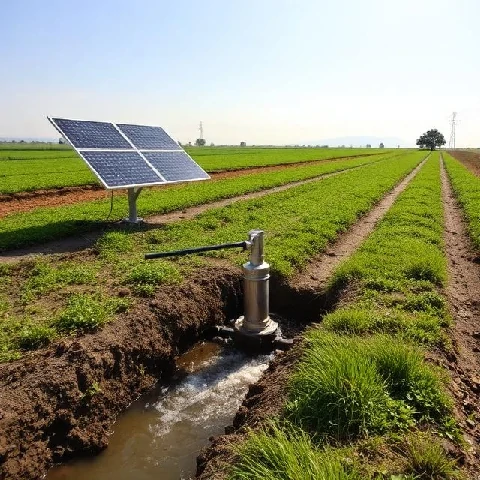
A pump moves water from where it is to where it is needed. On a farm, that might mean lifting groundwater from a well, pushing water through an irrigation line, or draining a flooded field. Without pumps, most large-scale irrigation would not exist.
The basic types are simple. Centrifugal pumps use a spinning impeller to push water outward. Positive-displacement pumps trap a fixed volume and force it through. Submersible pumps sit underwater in a well. Solar-powered pumps have become common in off-grid areas, especially in Africa and South Asia, where they replace diesel engines and manual lifting.
Power sources
- Electric motors: reliable, common where grid power is available
- Diesel and petrol engines: portable and powerful
- Solar panels: low running cost, ideal for remote sites
- Windmills: traditional, still used for livestock watering
Pump efficiency matters over time. A worn impeller or a mismatched motor can waste a lot of energy. Farmers who track flow rates and pressure often find that maintenance pays back faster than expected.
Comments
No comments yet. Be the first to share a thought.
Leave a comment