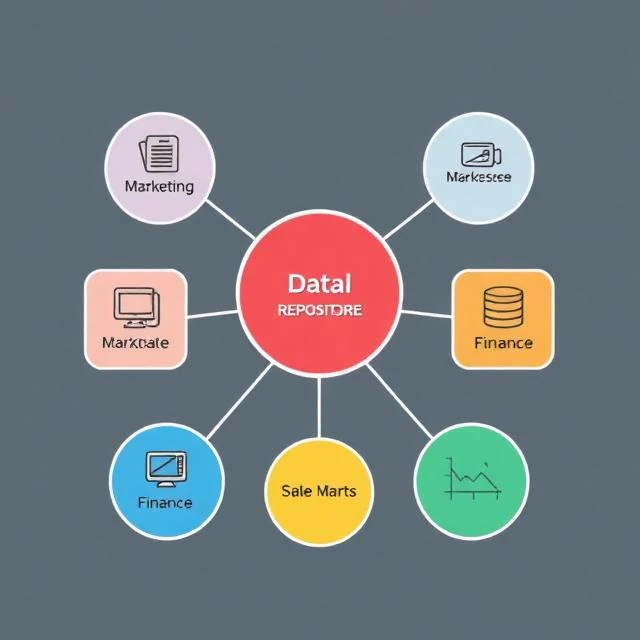
A data mart is a focused subset of a data warehouse. It serves one business area: marketing, finance, sales, or operations. The data mart contains only the data that team needs. Queries run faster because the dataset is smaller. Users find what they need because the tables are organized around their work. A data warehouse serves the whole organization. A data mart serves a department.
Data marts come in two flavors. Dependent marts are built from the central data warehouse. The warehouse is the source of truth. The mart is a curated view. Independent marts pull data directly from source systems. They are faster to build but risk inconsistency. Two independent marts might define revenue differently. The numbers do not match. Nobody trusts either. The dependent approach is more work upfront but pays off in consistency. The mart inherits the warehouse's definitions and quality controls. Modern architectures blur the line. Cloud warehouses can create virtual marts with views and materialized queries. The physical separation matters less than the logical one. A data mart is a lens. It focuses the warehouse on a specific problem.
Data mart characteristics
- Focused — serves one department or function
- Smaller — faster queries than the full warehouse
- Curated — organized around user needs
- Dependent or independent — sourced from warehouse or directly from systems
A data mart is not a smaller warehouse. It is a different view of the same data, shaped for a specific audience.
Comments
No comments yet. Be the first to share a thought.
Leave a comment