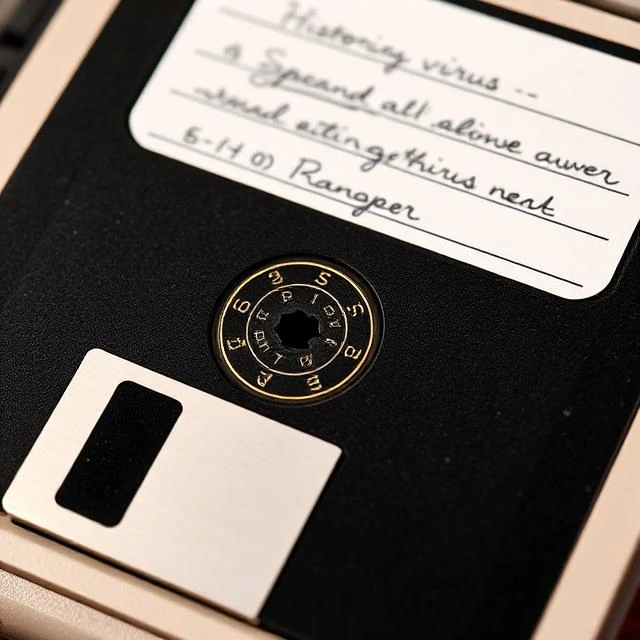
A virus attaches itself to a file or program and spreads when that file runs. It needs a host. It needs a user to execute the infected file. That is the difference between a virus and a worm. A worm spreads on its own. A virus hitchhikes. The first viruses spread through floppy disks. Later ones spread through email attachments, macro-enabled documents, and pirated software. The mechanics changed. The principle did not.
Viruses do many things. Some are pranks that display messages or corrupt files. Some steal data. Some open backdoors for other malware. Some are polymorphic, changing their code to evade signature detection. File infectors append themselves to executable files. Macro viruses live in documents and spread when the document opens. Boot sector viruses infect the startup code of a disk. Each type has its own behavior and its own detection challenges. Modern antivirus tools catch known viruses with signatures and unknown ones with behavioral analysis. But viruses are less common than they used to be. Ransomware, trojans, and phishing have taken their place. The category still matters because the techniques persist. A malicious macro in a spreadsheet is still a virus, and it still works.
Virus types
- File infector — attaches to executable files
- Macro virus — lives in documents, runs when opened
- Boot sector virus — infects startup code
- Polymorphic virus — changes code to evade detection
- Multipartite virus — infects multiple targets
A virus is malware with a host. Remove the host or block the execution, and the virus cannot spread.
Comments
No comments yet. Be the first to share a thought.
Leave a comment