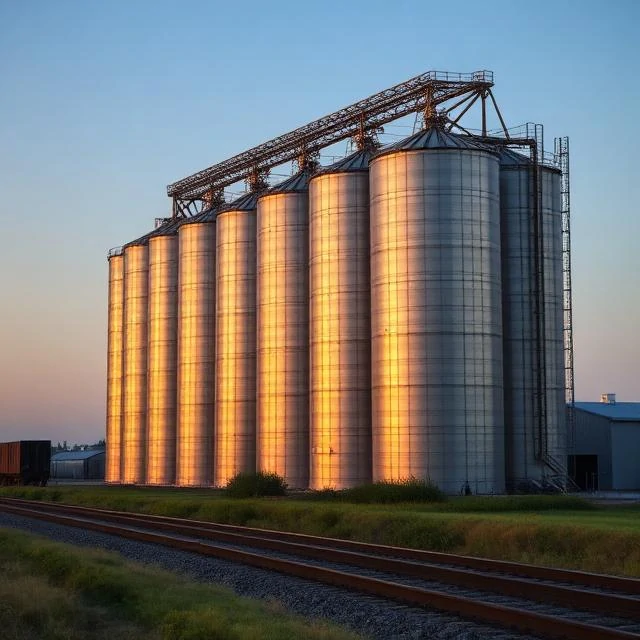
A silo is a tall, usually cylindrical structure for storing bulk material, most often grain or fermented forage. On a farm, silos hold everything from wheat and maize to silage, sawdust, and cement. The word comes from the Greek siros, meaning a pit for storing grain.
Grain silos are typically made of steel or concrete, with a cone-shaped bottom and an auger or conveyor to load and unload. They may stand alone or in clusters at a grain elevator. Tower silos, once common for silage on dairy farms, have largely been replaced by bunker silos and wrapped bales. But the tall concrete or steel tower remains an iconic feature of the rural landscape in the US Midwest and parts of Europe.
What silos must do
- Keep grain dry and free of pests
- Allow aeration to prevent mould and heating
- Withstand the pressure of tons of material
- Load and unload efficiently
Grain dust in a silo can be explosive, and accidents from engulfment or falls are a serious hazard. Safety rules for entering silos are strict for good reason. Modern operations monitor temperature and humidity inside the silo to catch problems before they spread.
Comments
No comments yet. Be the first to share a thought.
Leave a comment