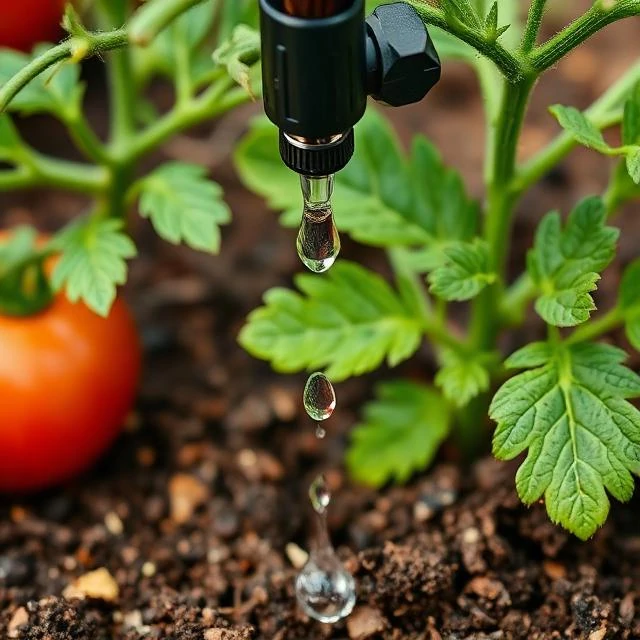
A system that delivers water directly to plant roots drop by drop.
💧
Drip irrigation, also called trickle irrigation, is a system that delivers water directly to plant roots through a network of pipes, tubes, and emitters, drop by drop. It was developed in the early 20th century, with significant advances in plastic emitters in the 1960s by Israeli engineer Simcha Blass, whose work helped make the technology commercially viable. Drip systems can reduce water use by 30–70 percent compared to flood or sprinkler irrigation by eliminating evaporation and runoff and delivering water precisely to the root zone. They are widely used for vegetables, orchards, vineyards, greenhouse crops, and row crops, particularly in arid regions. Components include a water source, pump, filters, mainlines, submainlines, and drip tape or tubing with emitters. Fertigation—injecting nutrients into the drip system—is a common companion practice. Challenges include emitter clogging, initial cost, and the need for filtration and maintenance. Drip irrigation is a key tool for improving water-use efficiency in agriculture.
Comments (2)
Roger M.
Drip irrigation uses up to 50 percent less water than sprinklers. It's more expensive to install but pays for itself.
Dr. Pat Hoffman
The article is clear. Water goes directly to the roots drop by drop. Minimal evaporation and runoff.
Comments (2)
Leave a comment