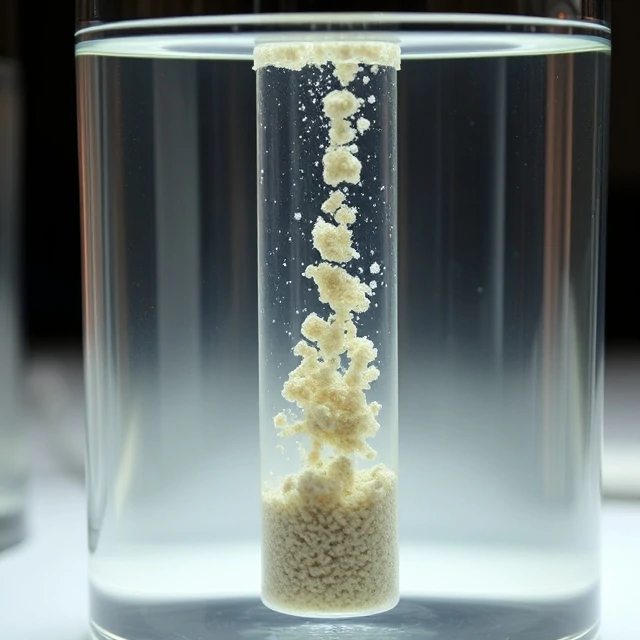
Particles suspended in water or air eventually settle. Sedimentation is the process by which sediment is deposited from a transporting medium. It occurs when velocity or turbulence drops below the level needed to keep particles in suspension or saltation.
In water, coarse particles settle first, producing graded beds in some environments. Quiet conditions allow fine mud to accumulate. Chemical sedimentation occurs when solutions become supersaturated. Rates range from the instantaneous dumping of a debris flow to the slow rain of pelagic particles in the deep sea.
Sedimentation builds stratigraphic successions that record environmental change. Controlling sedimentation is important in reservoirs, navigation channels, and wastewater treatment. Geologists study modern sedimentation to interpret the origin of ancient sedimentary rocks and to predict the distribution of reservoirs and seals.
- Process of sediment settling from suspension
- Occurs when transport energy decreases
- Produces layered deposits over time
- Key to forming sedimentary rock sequences
Comments
No comments yet. Be the first to share a thought.
Leave a comment