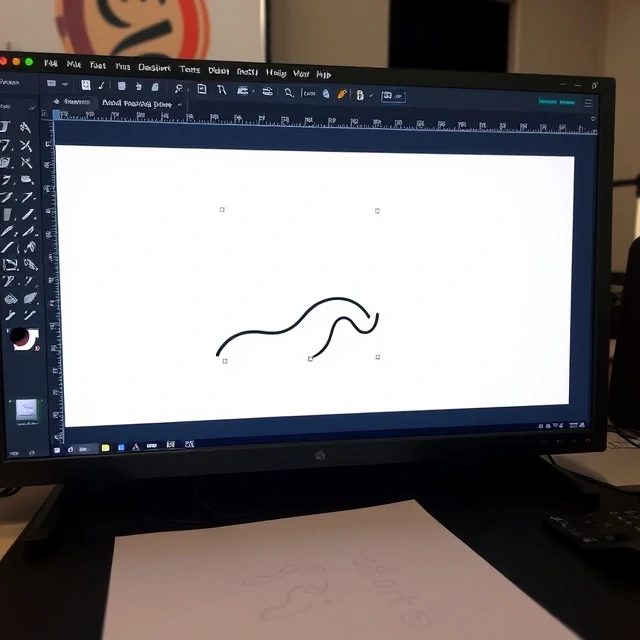
Stretch a logo to the size of a billboard and it stays sharp. That is the promise of vector graphics, images defined by mathematical paths rather than pixels. Each shape is described by points, lines, and curves with precise coordinates. The computer redraws the shape at whatever size you need, so there is no blur and no jagged edge. Adobe Illustrator, Affinity Designer, and Inkscape all work in this way.
Vector files stay small because they store instructions, not pixel data. A complex illustration might be a few hundred kilobytes. The same artwork as a raster image could run into hundreds of megabytes. This makes vectors ideal for logos, icons, typefaces, charts, and technical diagrams. The SVG format brought vectors to the web, and they now appear in interface icons, animated illustrations, and data visualizations.
Where vectors work best
- Logos and brand marks that appear at many sizes.
- Icons and interface elements on screens.
- Typography and letterforms.
- Maps, charts, and technical drawings.
Vectors have limits. They handle flat color and clean edges well, but photographs and painterly textures belong in raster. Most design projects combine both, placing a raster photograph behind vector type and shapes.
Comments
No comments yet. Be the first to share a thought.
Leave a comment