In 1914 a regional crisis in the Balkans ignited a general European war that became global. World War I lasted until 1918 and involved the major powers of Europe along with the Ottoman Empire, Japan, the United States, and colonial forces from around the world.
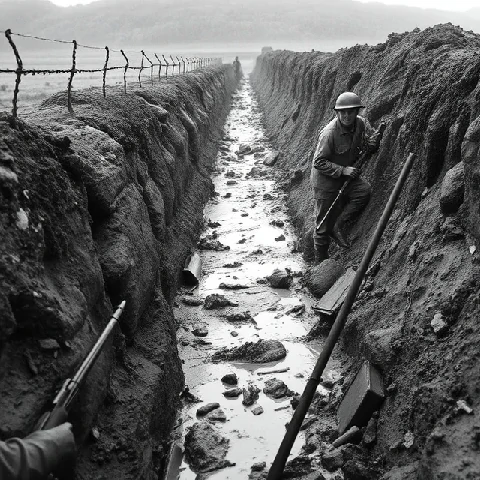
Trench warfare on the Western Front, vast casualties, and the mobilization of industrial economies defined the conflict. Empires of Austria-Hungary, Russia, Germany, and the Ottomans collapsed or were transformed. The peace settlements redrew maps and left unresolved grievances.
The war accelerated social change, including roles for women in the workforce and the expansion of state power. It also radicalized politics and set conditions for later dictatorship and renewed conflict. Memory of the war shaped interwar culture and continues to mark landscapes of cemeteries and memorials.
- Global conflict of 1914–1918
- Characterized by trench warfare and mass mobilization
- Destroyed or transformed several empires
- Set the stage for further twentieth-century upheaval
Comments
No comments yet. Be the first to share a thought.
Leave a comment