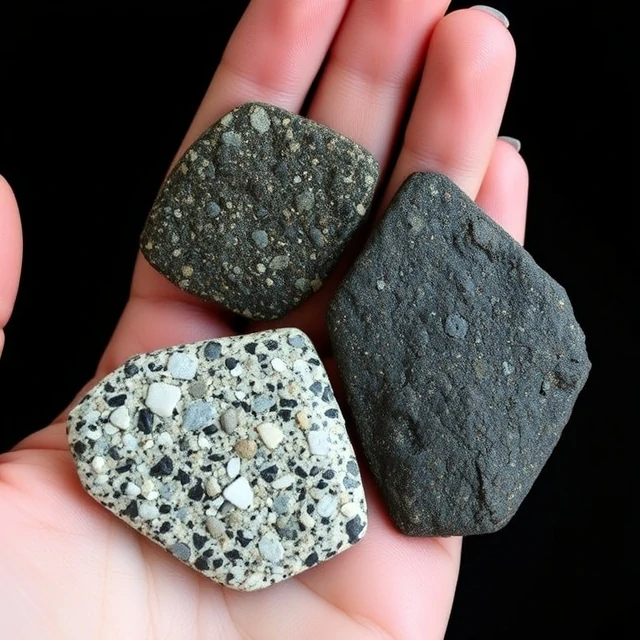
Molten rock that cools and solidifies becomes igneous rock. The process may occur deep underground, producing intrusive rocks with large crystals, or at the surface, producing extrusive rocks that cool too quickly for large crystals to grow.
Composition ranges from silica-rich granite and rhyolite to silica-poor gabbro and basalt. Texture—grain size, presence of glass, or gas bubbles—records cooling history. Igneous rocks make up the bulk of the oceanic crust and large parts of the continental crust.
They are the starting point of the rock cycle; weathering of igneous rock supplies sediment for sedimentary rocks, and both can later be metamorphosed. Field relations such as cross-cutting dikes and baked contacts help establish relative ages. Many ore deposits are associated with igneous activity.
- Rock formed from cooled magma or lava
- Intrusive or extrusive depending on cooling depth
- Classified by composition and texture
- Primary component of crustal rocks
Comments (2)
Leave a comment