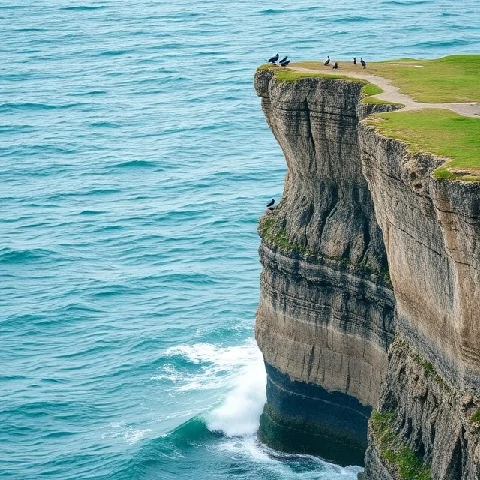
Vertical rock faces stop both hikers and waves. A cliff is a steep, often near-vertical exposure of rock formed by erosion, faulting, or volcanic activity. Sea cliffs rise above crashing surf; mountain cliffs tower over valleys.
Soft rock erodes faster than hard rock, so cliffs frequently develop where resistant layers overlie weaker ones. Freeze-thaw cycles, root wedging, and wave undercutting all contribute. The base of a cliff may be littered with fallen blocks known as talus.
Cliffs create specialized habitats for nesting seabirds and rare plants that tolerate thin soils. They also pose hazards of rockfall and require careful engineering for roads or buildings nearby. The sheer face remains one of the most dramatic landforms on the planet.
- Steep high face of rock
- Formed by erosion or tectonic processes
- Common along coasts and in mountains
- Creates unique habitats and hazards
Comments
No comments yet. Be the first to share a thought.
Leave a comment