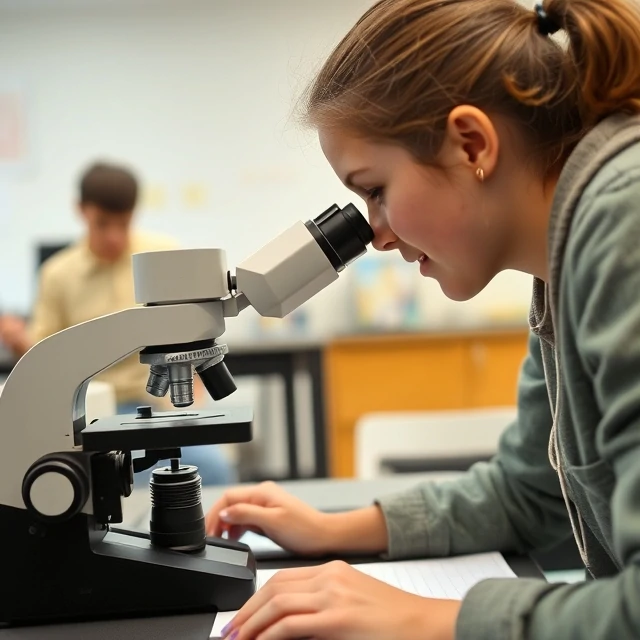
Science education teaches students how the natural world works. It covers biology, chemistry, physics, earth science, and astronomy. But it is not just a list of facts. Good science teaching builds the habits of inquiry: asking questions, forming hypotheses, testing them, and revising conclusions.
Laboratory work is central. Students mix chemicals, measure forces, observe cells under microscopes, and record what happens. The lab is where abstract ideas become concrete. It is also where students learn that experiments fail, data is messy, and results rarely match the textbook perfectly.
Science education faces challenges. Many countries report declining interest in science careers. Misinformation competes with evidence. Teachers sometimes lack resources or training. Still, the field adapts. Hands-on kits, online simulations, and citizen science projects are expanding what is possible.
Core practices
- Asking questions and defining problems
- Planning and carrying out investigations
- Analyzing data
- Constructing explanations
- Arguing from evidence
Comments
No comments yet. Be the first to share a thought.
Leave a comment