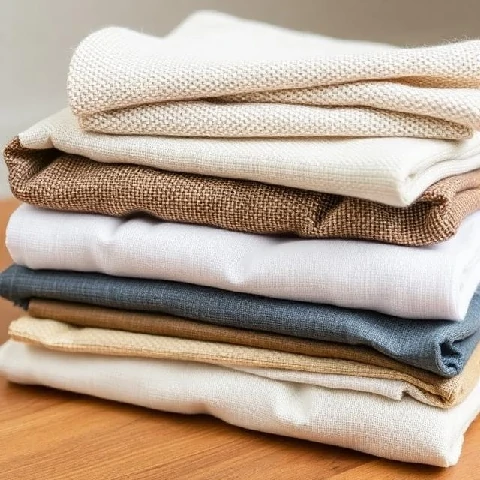
A textile is a woven or knitted fabric. The word also covers felt, lace, and other constructed cloth. Textiles start as fibers: cotton, wool, silk, linen, polyester, and many others. The fibers are spun into yarn, then yarn is woven, knitted, or felted into cloth. The structure of that cloth determines how it drapes, stretches, and wears.
Woven textiles interlace warp and weft threads at right angles. The pattern of that interlacing creates plain weave, twill, satin, and countless variations. Knitted textiles loop yarn into interlocking stitches, which gives stretch. Felted textiles mat fibers together with heat, moisture, and friction. Each structure has its own strengths. Denim is a twill weave, tough and diagonal. Jersey is a knit, soft and stretchy. Silk charmeuse is a satin weave, smooth and shiny on one side.
Common textile fibers
- Cotton — plant fiber, breathable, easy to sew
- Wool — animal fiber, warm, takes dye well
- Silk — animal fiber, strong, lustrous, expensive
- Linen — plant fiber, cool, wrinkles easily
- Polyester — synthetic, durable, quick-drying
Fabric choice changes a project more than any pattern adjustment. The same dress pattern in cotton and silk produces two completely different garments.
Comments (3)
Leave a comment