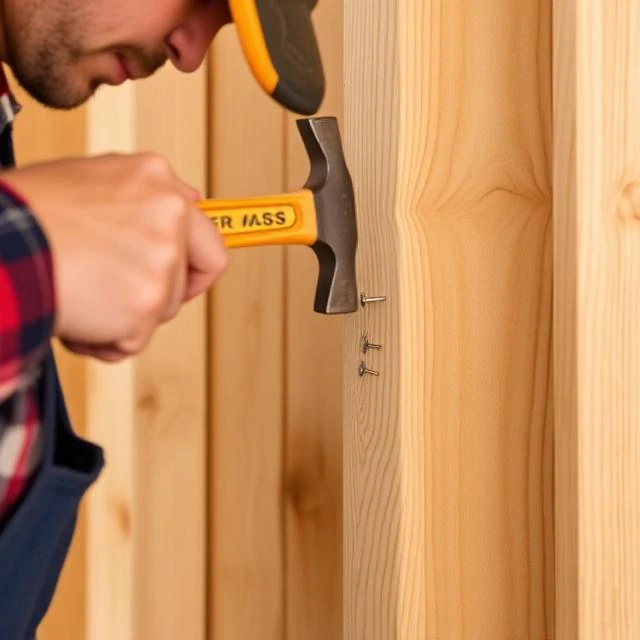
Nailing fastens wood and other materials using nails. It is one of the oldest and most common methods of construction. A nail is a thin metal spike with a head and a point. It is driven into the material with a hammer or a nail gun. The nail holds by friction and by the deformation of the wood fibers around it. Nails are cheap, fast, and strong. They are used in framing, sheathing, trim, and roofing. They are also used in concrete, masonry, and metal, with the right type of nail.
Nails come in many types. A common nail has a flat head and is used for general construction. A box nail is thinner and used for light work. A finish nail has a small head that can be set below the surface and filled. A roofing nail has a wide head to hold shingles. A galvanized nail is coated to resist rust. A ring-shank nail has ridges that grip the wood. A screw-shank nail has threads that turn as it is driven. Each type has its own purpose. The wrong nail can fail.
Nailing technique matters. The nail must be driven straight and to the correct depth. A bent nail must be removed and replaced. A nail that is too short will not hold. A nail that is too long will split the wood. The spacing and pattern of nails are specified by the building code and the engineer. A shear wall, for example, requires a specific nailing schedule to resist lateral forces. The nails are the connection. The connection is the structure. Nailing is simple. It is not casual.
Comments
No comments yet. Be the first to share a thought.
Leave a comment