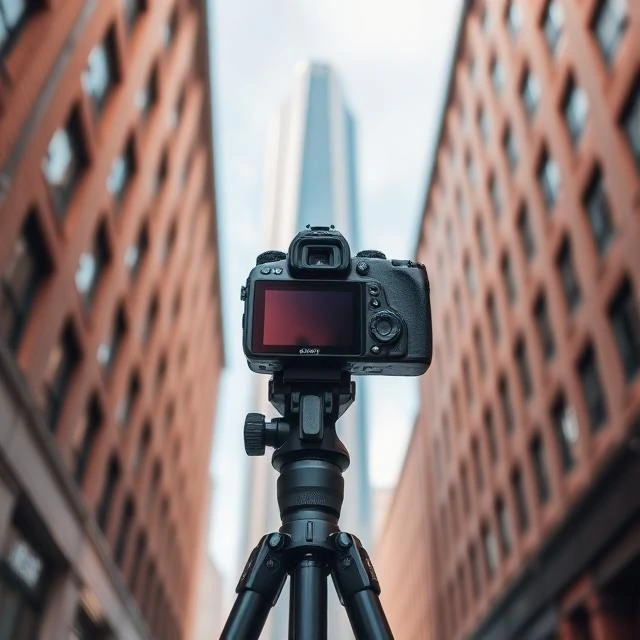
A tilt is a camera movement that rotates vertically on a fixed axis. The camera stays in one place and points up or down. It is the vertical counterpart of the pan. A tilt up reveals something above the frame, like a tall building or a sky. A tilt down reveals something below, like a character's feet or a cliff. A slow tilt can be meditative. A fast tilt can be disorienting. The tilt is a simple but effective tool.
The tilt is often used to reveal scale. The camera starts on a character's face and tilts up to reveal a towering monster. It starts on a landscape and tilts down to reveal a hidden valley. It starts on a detail and tilts up to reveal the whole. The tilt controls what the audience sees and when. It is a tool of revelation. It can also be used to follow a subject. If a character climbs a ladder, the camera tilts up to keep them in frame. If a character falls, the camera tilts down.
The tilt is not the same as a crane shot, which moves the camera through space. A tilt rotates the camera in place. The distinction matters. A tilt keeps the camera at a fixed distance from the subject. A crane shot changes the distance and the height. Both create vertical movement, but they create different effects. The tilt is simpler and cheaper. It requires only a tripod with a fluid head. The crane shot requires a crane. The tilt is the foundation of vertical camera movement.
Comments
No comments yet. Be the first to share a thought.
Leave a comment