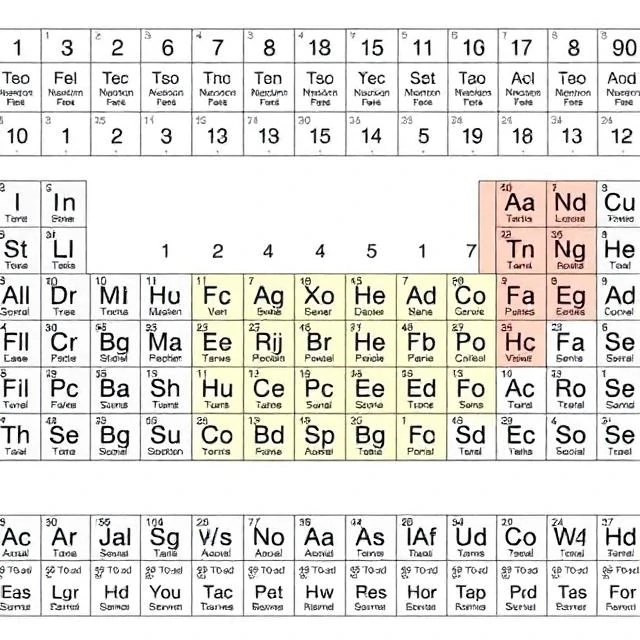
The atomic number is the number of protons in an atom's nucleus. It is the identity card of an element. Hydrogen has one proton, so its atomic number is 1. Helium has two, so its atomic number is 2. Carbon has six. Gold has 79. The periodic table is arranged in order of increasing atomic number. The number is usually written as a subscript before the element symbol.
The atomic number determines the element. Change the number of protons, and you change the element. Add a proton to nitrogen, and you get oxygen. Remove a proton from gold, and you get platinum. The number of neutrons can vary without changing the element, but the number of protons cannot. That is why atomic number is the fundamental property of an element.
In a neutral atom, the number of electrons equals the number of protons. The atomic number therefore also tells you how many electrons the atom has. That matters because electrons determine chemical behavior. Elements in the same group of the periodic table have the same number of valence electrons, which is why they have similar properties. The atomic number links the nucleus to the electron cloud.
The concept was developed by Henry Moseley in 1913. He showed that the atomic number, not atomic weight, determines the position of an element in the periodic table. His work resolved inconsistencies in Mendeleev's original table and led to the modern periodic law.
Comments
No comments yet. Be the first to share a thought.
Leave a comment