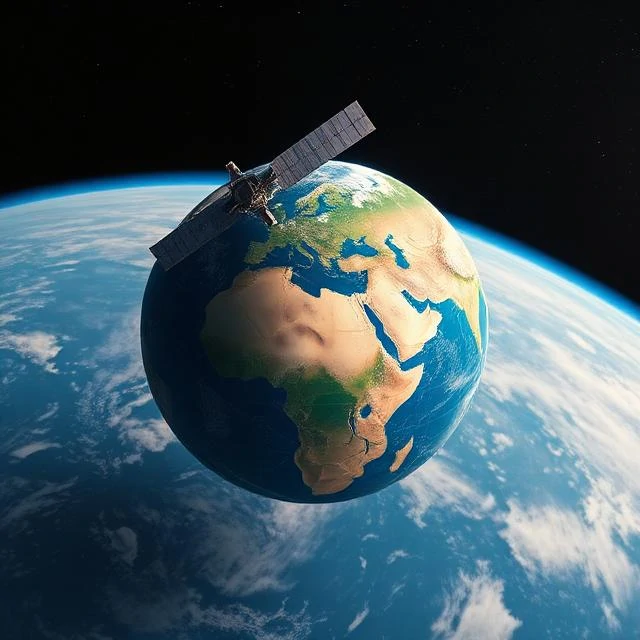
Park a satellite 35,786 kilometres above the equator and it matches Earth's rotation. From the ground, it appears fixed in the sky. That is geostationary orbit, and it is where most communications and weather satellites live.
The orbit is circular, equatorial, and slow. One revolution takes exactly 23 hours, 56 minutes, and 4 seconds, matching the sidereal day. Ground antennas can point at a fixed spot without tracking hardware.
Why it matters
- Continuous coverage of one region
- Fixed antenna pointing for ground stations
- Weather monitoring of entire hemispheres
- Broadcast and telephony relay
Slots are limited and regulated internationally. Only so many satellites can occupy the ring without interfering with each other, which is why orbital positions are allocated through treaties.
Comments
No comments yet. Be the first to share a thought.
Leave a comment