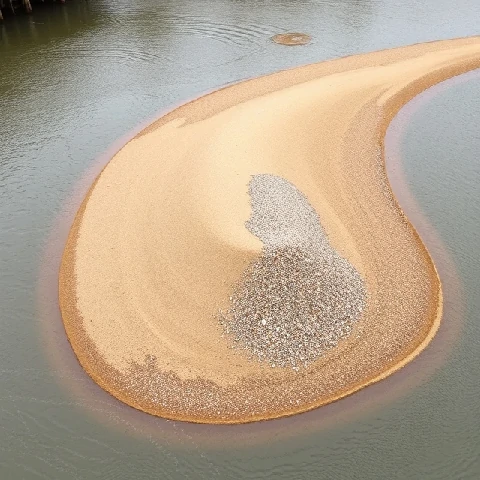
Transport eventually ends and particles come to rest. Deposition is the laying down of sediment by water, wind, ice, or gravity. It occurs when the energy of the transporting medium drops below the threshold needed to keep particles moving.
Rivers deposit gravel in channels and mud on floodplains. Wind builds dunes from sand. Glaciers dump till in moraines. In the deep sea, fine particles settle slowly to form ooze. Each environment produces characteristic textures and structures that geologists use to interpret ancient deposits.
Deposition builds landforms and eventually sedimentary rocks. Rates vary from instantaneous debris-flow dumps to the slow accumulation of deep-sea clay. Understanding depositional processes allows reconstruction of past landscapes and prediction of where resources such as petroleum reservoirs or aquifers may occur.
- Settling and accumulation of sediment
- Occurs when transport energy decreases
- Produces distinctive sedimentary structures
- First step toward formation of sedimentary rock
Comments (2)
Leave a comment