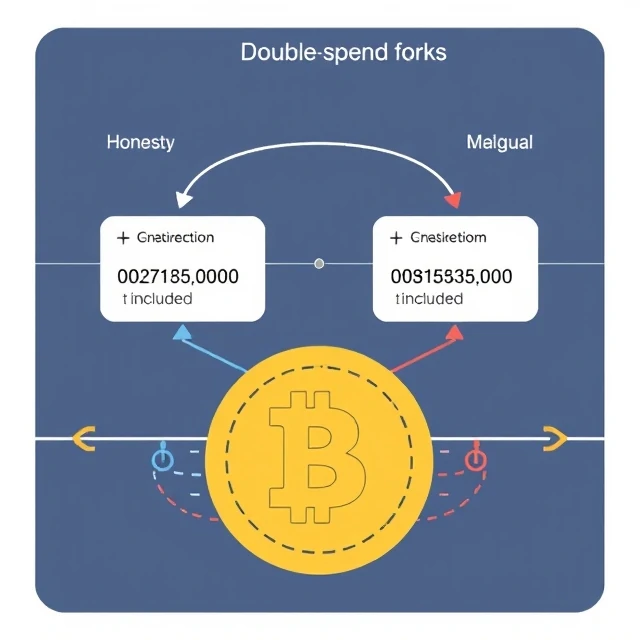
Double spending is spending the same coins twice. In a physical cash system, it is impossible. You hand over the bill and you no longer have it. Digital files can be copied, which is why early digital cash schemes failed. Bitcoin solved this with the blockchain. Once a transaction is confirmed in a block, the coins belong to the new owner. The old owner cannot spend them again because the network rejects any transaction that tries to use already-spent outputs.
Double spending becomes possible during a 51 percent attack. The attacker sends coins to an exchange, waits for confirmation, then broadcasts a secret longer chain that excludes the original transaction. The network switches to the longer chain. The deposit never happened. The attacker still has the coins and has already withdrawn another asset from the exchange. Ethereum Classic suffered double-spend attacks in 2019 and 2020 that cost exchanges millions. The defense is simple: wait for more confirmations. Six blocks on Bitcoin makes a double-spend attack impractical. One confirmation on a small chain is not enough.
Double-spend prevention
- Wait for multiple confirmations before accepting payment
- Higher-value transactions need more confirmations
- Small chains are more vulnerable than large ones
- Exchanges often set their own confirmation thresholds
The cost of a 51 percent attack on Bitcoin is prohibitive. The cost on a small altcoin is not. That difference is why confirmation requirements vary.
Comments
No comments yet. Be the first to share a thought.
Leave a comment