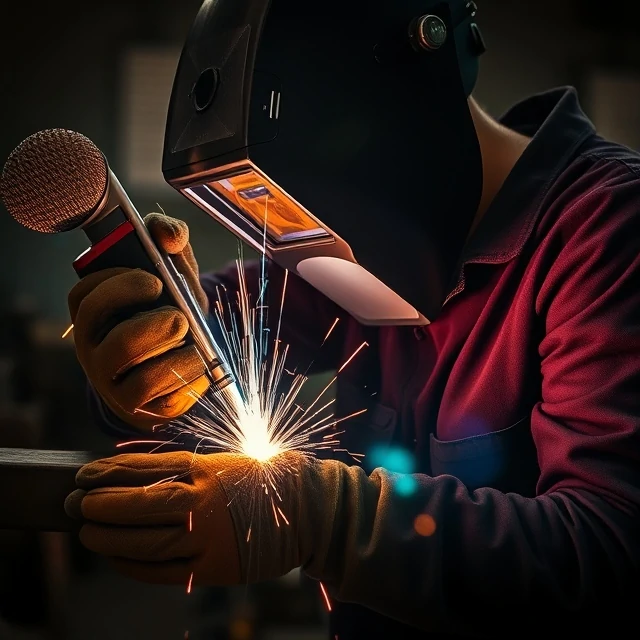
Welding joins metal parts by heating them to melting point and letting them fuse. Sometimes a filler metal is added. Sometimes the parts melt together on their own. The result is a joint that is as strong as the surrounding metal, or stronger. That is the difference between welding and soldering. Soldering uses a filler that melts at a lower temperature. The base metal never melts. Welding melts the base metal itself.
Common processes include MIG, TIG, stick, and oxy-acetylene. MIG welding feeds a continuous wire electrode through a gun. It is fast and relatively easy to learn. TIG welding uses a tungsten electrode and a separate filler rod. It is slower and demands more skill, but it produces clean, precise welds on thin metal. Stick welding uses a flux-coated electrode that burns away as it welds. It works outdoors and on dirty metal. Oxy-acetylene welding uses a gas flame and a filler rod, often for thin sheet and bicycle frames.
Safety essentials
- Welding helmet with proper shade lens
- Leather gloves, jacket, and apron
- Ventilation or fume extraction
- Fire extinguisher nearby
- Remove flammable materials from the area
Arc eye, also called welder's flash, feels like sand in the eyes and hurts for hours. It comes from watching the arc without protection. Never look at a welding arc without a helmet.
Comments
No comments yet. Be the first to share a thought.
Leave a comment