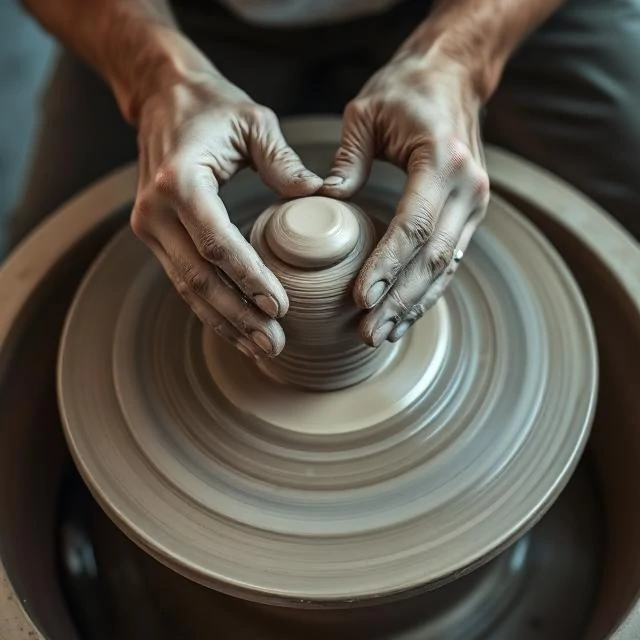
A potter's wheel is a rotating platform that spins clay while the potter shapes it with their hands. The wheel head turns fast enough that centrifugal force helps the clay rise and open. The potter controls the speed with a foot pedal or a lever. The craft is called throwing, not because the clay is tossed, but from an old word meaning to turn or twist.
Two main types exist. The electric wheel uses a motor and a belt or direct drive. The kick wheel uses a heavy flywheel turned by the potter's foot. Kick wheels are quieter and give a different rhythm, but they demand more physical effort. Most studios today use electric wheels with adjustable speed and a splash pan to catch clay slurry.
Basic throwing steps
- Wedge the clay to remove air pockets
- Center the clay on the spinning wheel head
- Open the center with your thumbs
- Pull the walls up and shape the profile
- Trim the foot when the clay is leather-hard
Centering is the hard part. If the clay wobbles, nothing that follows will be symmetrical. Beginners spend hours just learning to center a two-pound ball. Once that clicks, the rest of the process opens up.
Comments
No comments yet. Be the first to share a thought.
Leave a comment