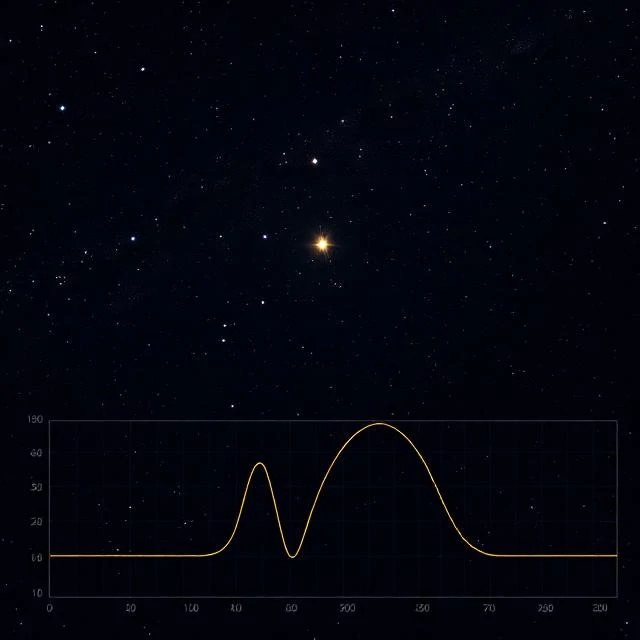
Cepheid variables are stars that pulse. Their brightness rises and falls in a regular cycle, and the length of that cycle is tied to the star's intrinsic luminosity. A Cepheid with a long period is brighter than one with a short period. That relationship, discovered by Henrietta Swan Leavitt in 1912, turned Cepheids into cosmic yardsticks.
Here is how it works. Astronomers measure a Cepheid's period from its light curve. The period tells them the star's true brightness. Comparing true brightness to apparent brightness gives the distance. The method works across millions of light-years, which is why Cepheids were essential to Edwin Hubble's discovery that the universe is expanding.
Cepheids are young, massive stars, typically yellow supergiants. They pulsate because their outer layers are unstable to changes in opacity. When the star contracts, the layer becomes more opaque, trapping heat and pushing the star outward. When it expands, the layer becomes less opaque, and the star contracts again. The cycle repeats with clocklike regularity.
They are not perfect distance indicators. Dust can dim them, and crowding can confuse measurements. But they remain one of the most reliable rungs on the cosmic distance ladder.
Comments
No comments yet. Be the first to share a thought.
Leave a comment