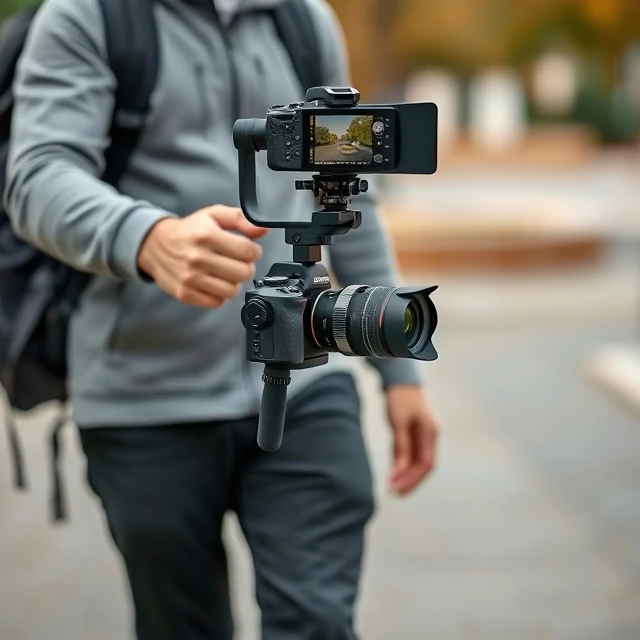
A gimbal is a stabilizing device that keeps a camera level and steady. It uses motors and sensors to counteract movement, allowing smooth video and sharp handheld shots. Handheld gimbals, also called stabilizers, are common in video production. They hold a camera or phone in a frame that pivots on three axes: pitch, roll, and yaw. When the operator moves, the gimbal adjusts to keep the camera steady. The result is footage that looks like it was shot on a dolly or a Steadicam, without the weight and cost.
Gimbals come in different sizes. Small gimbals hold smartphones. Medium gimbals hold mirrorless cameras and DSLRs. Large gimbals hold cinema cameras. Drone gimbals are built into the aircraft, keeping the camera steady as the drone flies. Gimbals have limitations. They require calibration, they have a maximum payload, and they do not work well in extreme wind or when the operator moves too fast. They also drain batteries. But for smooth motion, they are hard to beat. A gimbal is not a substitute for good technique. It is a tool that rewards smooth movement and punishes jerky movement.
Types of gimbals
- Handheld. For smartphones and cameras.
- Drone. Built into aerial platforms.
- Cinema. For large professional cameras.
- Wearable. Mounted on a harness or helmet.
A gimbal is not the same as a tripod. A tripod holds the camera still. A gimbal holds it steady while moving.
Comments
No comments yet. Be the first to share a thought.
Leave a comment