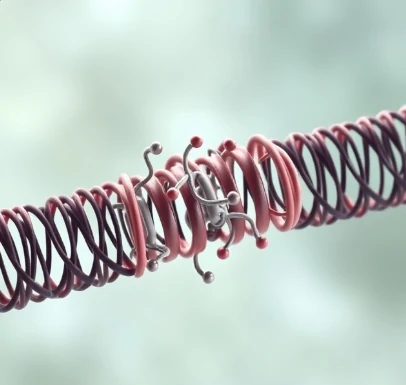
Every electrical signal in the nervous system depends on the controlled movement of ions across membranes. Ion channels are the protein pores that permit this movement. Some open in response to voltage changes, others to the binding of neurotransmitters or to mechanical stretch.
Selectivity filters allow certain ions—sodium, potassium, calcium, chloride—to pass while excluding others. The timing of channel opening and closing determines the shape of action potentials, the duration of synaptic currents, and the resting potential itself. Genetic mutations in channel genes produce a wide range of neurological disorders, from epilepsy to migraine to periodic paralysis.
Pharmacology has exploited ion channels for decades: local anesthetics block sodium channels, many antiseizure drugs modulate sodium or potassium channels, and numerous other agents target ligand-gated channels. High-resolution structures now reveal how these proteins sense voltage or ligands and how drugs bind to them.
A single neuron expresses dozens of distinct channel types that together sculpt its electrical personality.
Comments (2)
Leave a comment