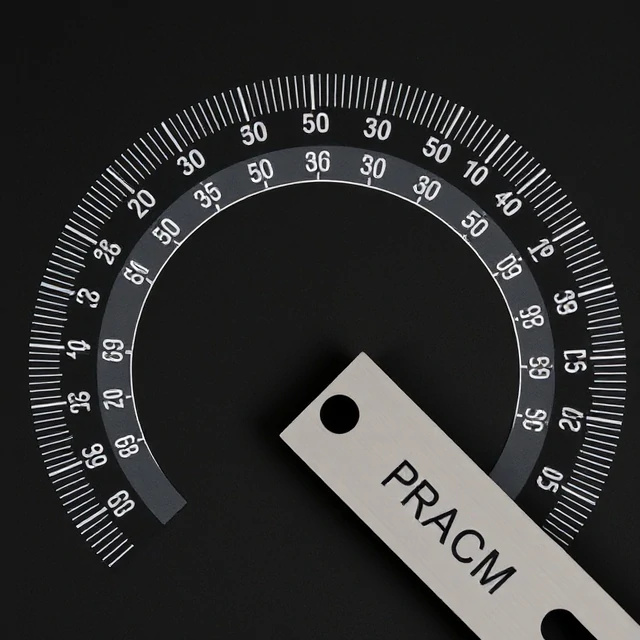
Divide a circle into 360 equal parts. Each part is one degree. The number 360 likely comes from ancient astronomy: Babylonian astronomers used a base-60 system and divided the circle into 360 parts, close to the number of days in a year.
Degrees are convenient for everyday use. A right angle is 90 degrees, a straight line 180. Compass bearings use degrees from north. Surveyors, navigators, and draftsmen all work in degrees. The symbol ° follows the number: 45°.
In advanced mathematics, radians often replace degrees because they simplify formulas. A full circle is 2π radians, so 180 degrees equals π radians. Converting between the two is a basic skill. Degrees remain common in applied fields and in education, while radians dominate calculus and theoretical work.
- 1/360 of a full circle
- Right angle is 90 degrees
- Origin in Babylonian astronomy
- Radians are preferred in calculus
Comments
No comments yet. Be the first to share a thought.
Leave a comment