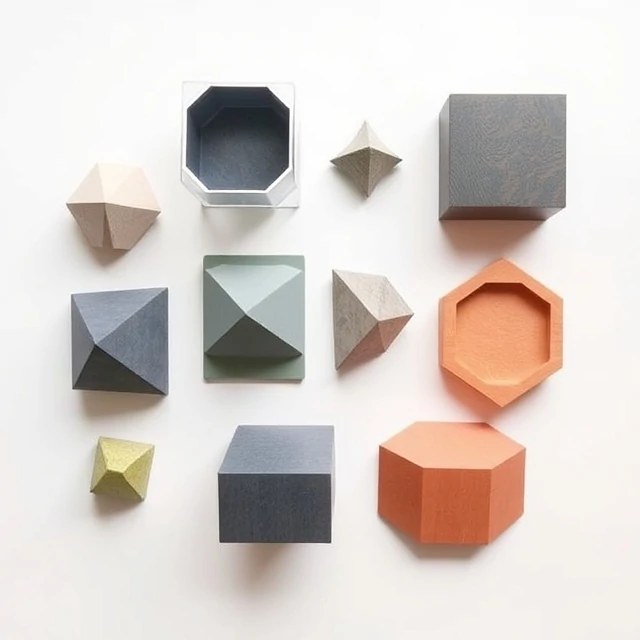
Form describes the shape and structure of an object as defined by its outlines. It is what you see when you trace the edges. In design, form covers the overall shape of a product, a poster, a building, or a letterform. It includes geometric properties like proportion, symmetry, and contour. Form is distinct from function, though the two are related. A chair's form must support sitting. A logo's form must be recognizable at small sizes.
Designers work with form at every scale. In product design, form determines how an object feels in the hand and how it fits in a space. In graphic design, form applies to the shape of layouts and the contours of type. In architecture, form is the mass and silhouette of a building. The Bauhaus school in the 1920s argued that form should follow function, meaning the shape of an object should be determined by its purpose. Later designers pushed back, noting that form can also lead function, as when a new shape suggests a new use.
Elements of form
- Shape: the outline or contour.
- Proportion: the relationship of parts to the whole.
- Scale: size relative to other objects or the body.
- Volume: the three-dimensional mass of an object.
Form is not decoration. It is the physical or visual structure that makes an object what it is.
Comments
No comments yet. Be the first to share a thought.
Leave a comment