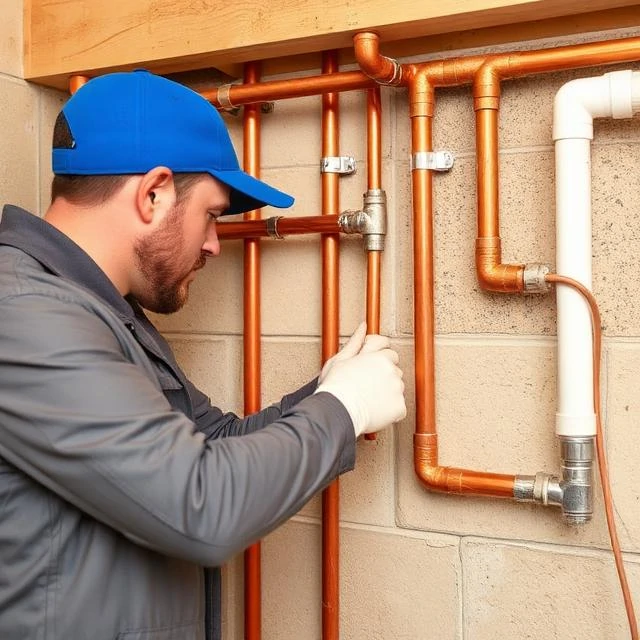
Plumbing installs pipes and fixtures for water and waste. It brings clean water into a building and takes waste out. It includes supply lines, drain lines, vents, traps, water heaters, and fixtures like sinks, toilets, and showers. Plumbing is one of the most regulated systems in construction. Bad plumbing can contaminate water, cause floods, and spread disease. In the kitchen, the plumbing is the sink, the faucet, the drain, and the dishwasher. It brings water in. It takes water out. It is the plumbing of the kitchen. It is the plumbing of the cook.
Plumbing has two main systems. The supply system carries water under pressure from the main to the fixtures. The drain system relies on gravity, so pipes must slope correctly. Vent pipes allow air into the system so water flows smoothly and sewer gases do not enter the building. Traps hold a small amount of water to seal out odors. In the kitchen, the supply line is under the sink. The drain line is under the sink. The vent is in the wall. The trap is under the sink. The plumbing is the system. The system is the plumbing. The plumbing is the same.
Plumbing materials vary. Copper is traditional and durable. PEX is flexible and easy to install. CPVC is used for hot and cold water. PVC and ABS are used for drains. Cast iron is used for drains in commercial buildings because it is quiet. In the kitchen, the pipes are usually copper or PEX for supply and PVC for drain. The choice depends on the cost, the code, and the application. The plumbing is the pipe. The pipe is the plumbing. The plumbing is the same. The same is the kitchen. The kitchen is the plumbing. The plumbing is the cook. The cook is the plumbing. The plumbing is the same. The same is the meal. The meal is the plumbing. The plumbing is the same.
Comments
No comments yet. Be the first to share a thought.
Leave a comment