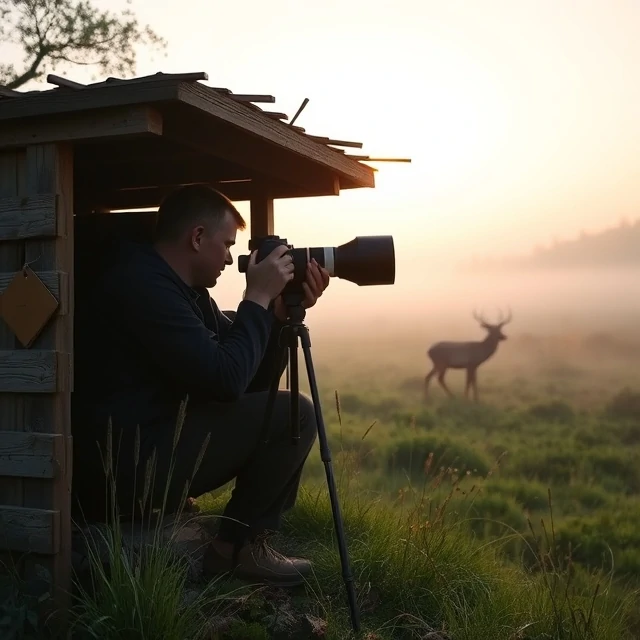
Wildlife photography captures animals in their natural habitats. It is one of the most challenging genres. The subjects are unpredictable. They move fast. They are often far away. The light is not always good. The photographer must be patient, knowledgeable, and prepared. They must know the animal's behavior, its habits, and its patterns. They must wait for hours, sometimes days, for the right moment. The reward is an image that shows an animal as it really is, in its own world.
Wildlife photography requires long lenses, fast cameras, and steady support. A 400mm or 600mm lens is common. A tripod or monopod helps with stability. A camera with fast autofocus and a deep buffer is essential for action. But equipment is not enough. The best wildlife photographers are naturalists. They understand ecology, conservation, and animal behavior. They respect their subjects. They do not bait, disturb, or stress animals for a shot. They follow ethical guidelines. They leave no trace. They put the animal's welfare above the photograph. That ethic is what separates wildlife photography from trophy hunting with a camera.
Wildlife photography tips
- Know your subject. Learn behavior and habits.
- Be patient. The best moments come to those who wait.
- Use a long lens. Get close without getting too close.
- Respect the animal. Do not disturb or stress it.
- Follow ethics. Leave no trace, do not bait.
Wildlife photography is not just about the animal. It is about the encounter. It is about being in the presence of something wild and capturing a moment of it.
Comments
No comments yet. Be the first to share a thought.
Leave a comment