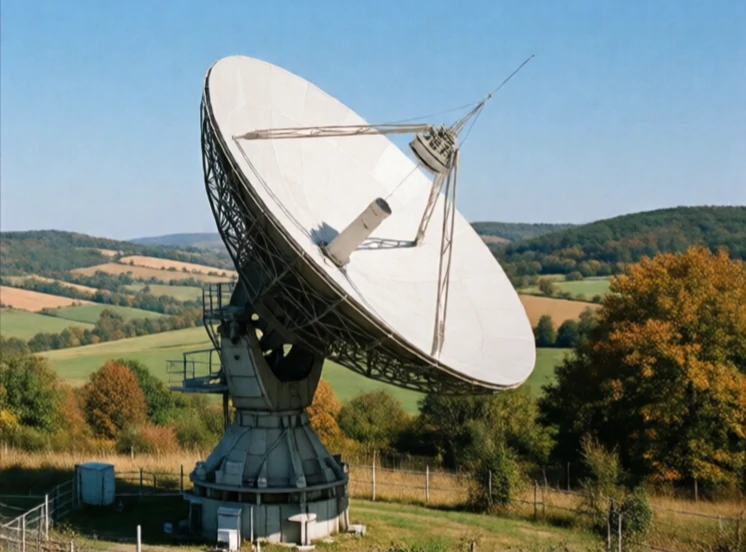
Satellite communication uses satellites to relay signals over long distances. A ground station sends a signal to a satellite. The satellite amplifies it and sends it back to another ground station. The signal can cross oceans and continents. Satellites connect places that cables cannot reach.
Satellites come in different orbits. Geostationary satellites stay over one spot. They are used for TV, weather, and some internet. Low Earth orbit satellites move quickly. They are used for imaging, science, and constellations like Starlink. Medium Earth orbit hosts navigation satellites.
Satellite communication bands
- L-band: 1 to 2 GHz, mobile satellite
- S-band: 2 to 4 GHz, weather and some mobile
- C-band: 4 to 8 GHz, TV and data
- X-band: 8 to 12 GHz, military
- Ku-band: 12 to 18 GHz, TV and internet
- Ka-band: 18 to 40 GHz, high-speed internet
Satellite communication has limits. Geostationary satellites have high latency. Low Earth orbit satellites need many satellites for coverage. Rain fade affects high frequencies. But satellites reach remote areas, ships, and aircraft. They are essential for global connectivity.
Comments
No comments yet. Be the first to share a thought.
Leave a comment