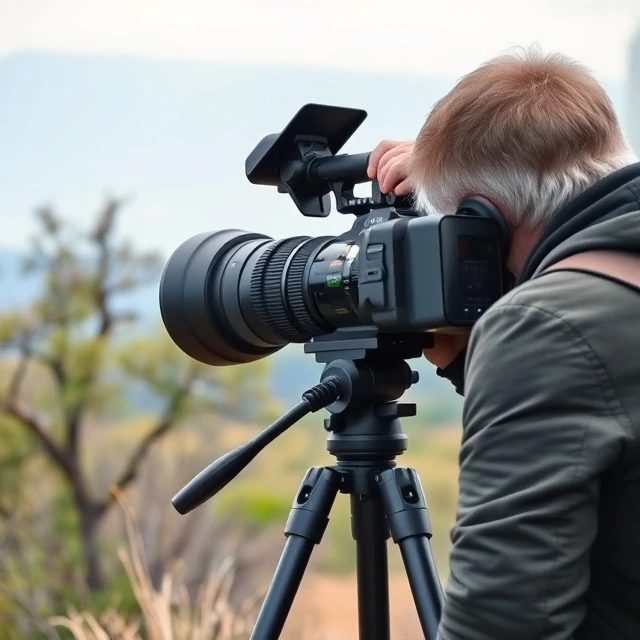
A telephoto lens has a long focal length. It magnifies distant subjects, bringing them closer. A 200mm lens makes a subject 200mm away appear four times larger than a 50mm lens would. Telephoto lenses are used for sports, wildlife, and portraits. They compress perspective, making distant objects look closer together. That compression can be flattering for portraits, because it reduces the apparent size of the nose and ears. It can also be dramatic for landscapes, stacking layers of mountains into a single frame.
Telephoto lenses are heavy and expensive. The longer the focal length, the more glass is needed, and the more the lens costs. They also have a narrow depth of field, which can be an advantage or a disadvantage. A 400mm f/2.8 lens is a professional tool, costing thousands of dollars and weighing several kilograms. It is used by sports and wildlife photographers who need reach and speed. A 70-200mm f/2.8 zoom is a workhorse for weddings, events, and portraits. A 55-250mm kit lens is a budget option for beginners. Telephoto lenses require steady hands or a tripod. Image stabilization helps, but it is not a substitute for good technique.
Telephoto lens uses
- Sports. Reaching athletes on the field.
- Wildlife. Photographing animals from a distance.
- Portraits. Compressing features and blurring backgrounds.
- Landscapes. Isolating distant details and compressing layers.
- Events. Shooting from the back of a crowd.
A telephoto lens is not just for distant subjects. It is a way of seeing. It compresses the world, bringing distant things together.
Comments
No comments yet. Be the first to share a thought.
Leave a comment