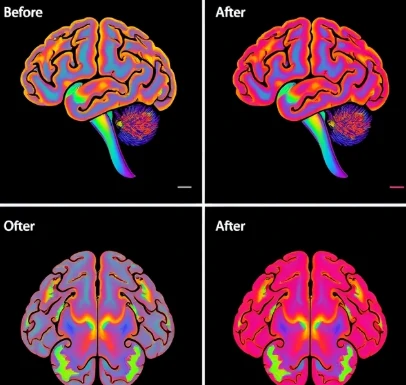
The brain is not a fixed wiring diagram. Throughout life, experience, learning, and injury can reorganize neural circuits. This capacity is called neuroplasticity. It encompasses changes in synaptic strength, the growth or retraction of processes, the birth of new neurons in limited regions, and large-scale shifts in the mapping of function onto anatomy.
Plasticity is most exuberant during critical periods of development, yet it persists in adulthood and can be enhanced by training, neuromodulation, or pharmacological means. After injury, residual plasticity supports recovery of function, although it can also produce maladaptive outcomes such as phantom pain or focal dystonia.
Molecular mechanisms include long-term potentiation and depression, structural remodeling of spines, and alterations in inhibitory tone that open windows for change. Understanding how to guide plasticity is a central goal of rehabilitation science and of efforts to treat developmental and psychiatric disorders.
Even a few days of altered sensory experience can measurably shift cortical maps.
Comments
No comments yet. Be the first to share a thought.
Leave a comment