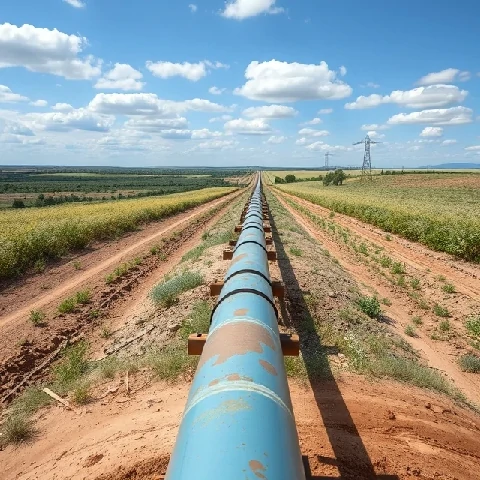
Some commodities never see a truck or ship after they enter the network. Pipeline transport moves liquids and gases through continuous pipes from production areas to refineries, terminals, or consumption points.
Crude oil, refined products, natural gas, and certain chemicals dominate pipeline traffic. Pumping stations maintain pressure and flow over long distances. Pipelines offer high capacity and low unit cost but require large upfront investment and fixed routes.
Safety, leak detection, and right-of-way management are constant operational concerns. Regulatory oversight is strict because failures can cause environmental and human harm. Where geography and volume justify the investment, pipelines form the most efficient bulk movement system available.
- Movement of liquids or gases through pipes
- High capacity and low unit operating cost
- Requires fixed infrastructure and pumping stations
- Heavily regulated for safety and environment
Comments (2)
Leave a comment